Feeding & Nutrition
Do Chickens Need Grit and Oyster Shell?
Find out why grit and oyster shell matter for backyard chickens, how to offer them, and what soft eggshells tell you about calcium intake.
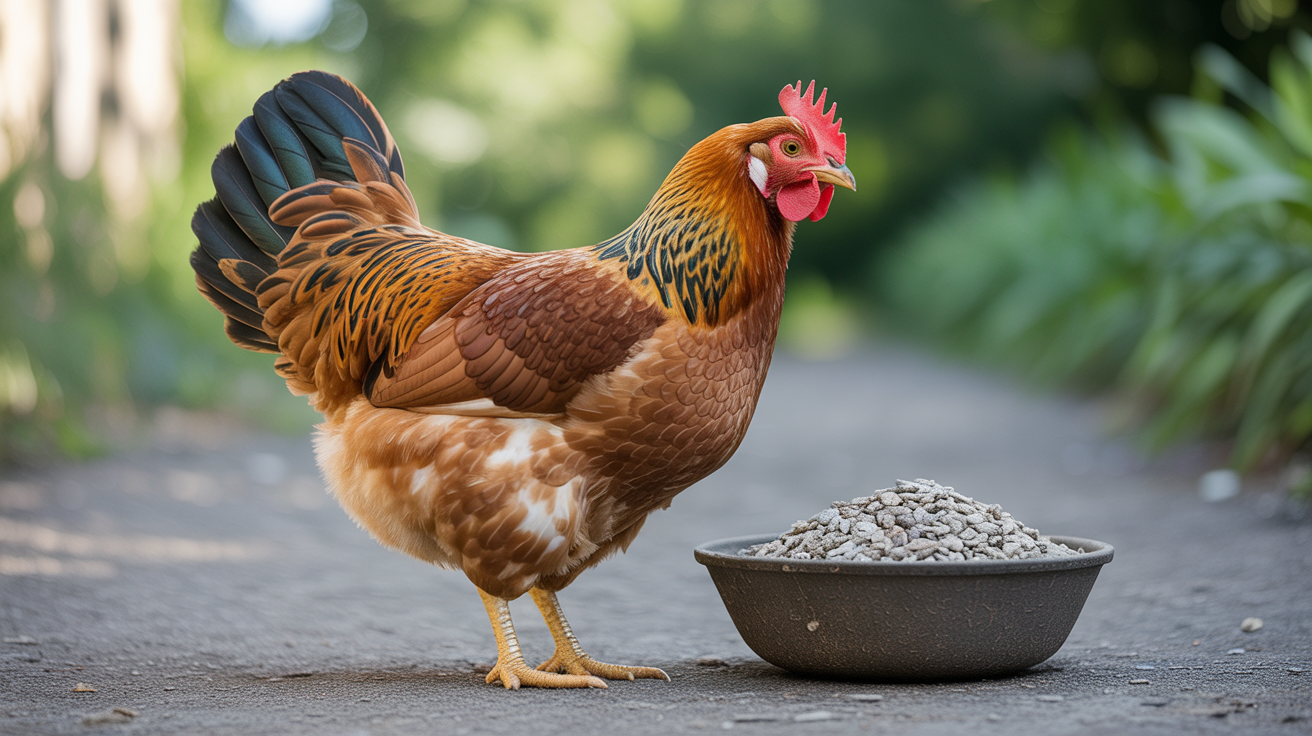
Chickens eating whole grains, seeds, or kitchen scraps need grit to digest them properly. Laying hens need calcium to produce hard-shelled eggs. These two supplements serve completely different purposes, and getting them both right is one of the simplest things you can do to keep your flock healthy. Here is what each one does, who needs it, and how to offer it.
What Is Chicken Grit and Why Does It Matter
Chickens have no teeth. Instead, they swallow small, hard particles that lodge in the muscular gizzard, where the grinding action breaks down tough food. That grinding medium is grit.
Commercial grit is usually crushed granite or flint, sold in two sizes:
- Chick grit (fine) — for birds under 8 weeks old
- Grower/layer grit (coarse) — for birds 8 weeks and older
Chickens that eat only crumble or pellet feed may need very little supplemental grit, since those feeds are already ground to a digestible size. But any bird eating whole grains, corn, mealworms, grass, vegetables, or safe treats and kitchen scraps needs grit available at all times to break those items down efficiently.
What Happens Without Grit
A bird without enough grit can develop an impacted crop or gizzard. Food sits unground, ferments, and causes a chain of digestive trouble. Signs include a full, hard crop that never empties overnight, lethargy, and weight loss. Crop impaction that does not resolve with gentle massage, hydration, and soft food warrants a call to a poultry vet. Prevention is straightforward: keep grit in a small dish where birds can self-regulate.
Free-Range Birds and Natural Grit
Chickens with access to bare soil, gravel paths, or a dirt run often pick up enough natural grit on their own. If your birds forage on grass or bare dirt and you occasionally spot them pecking at fine pebbles, they are probably self-supplementing. Offering a dish of commercial grit still does no harm and removes any guesswork.
What Is Oyster Shell and Who Needs It
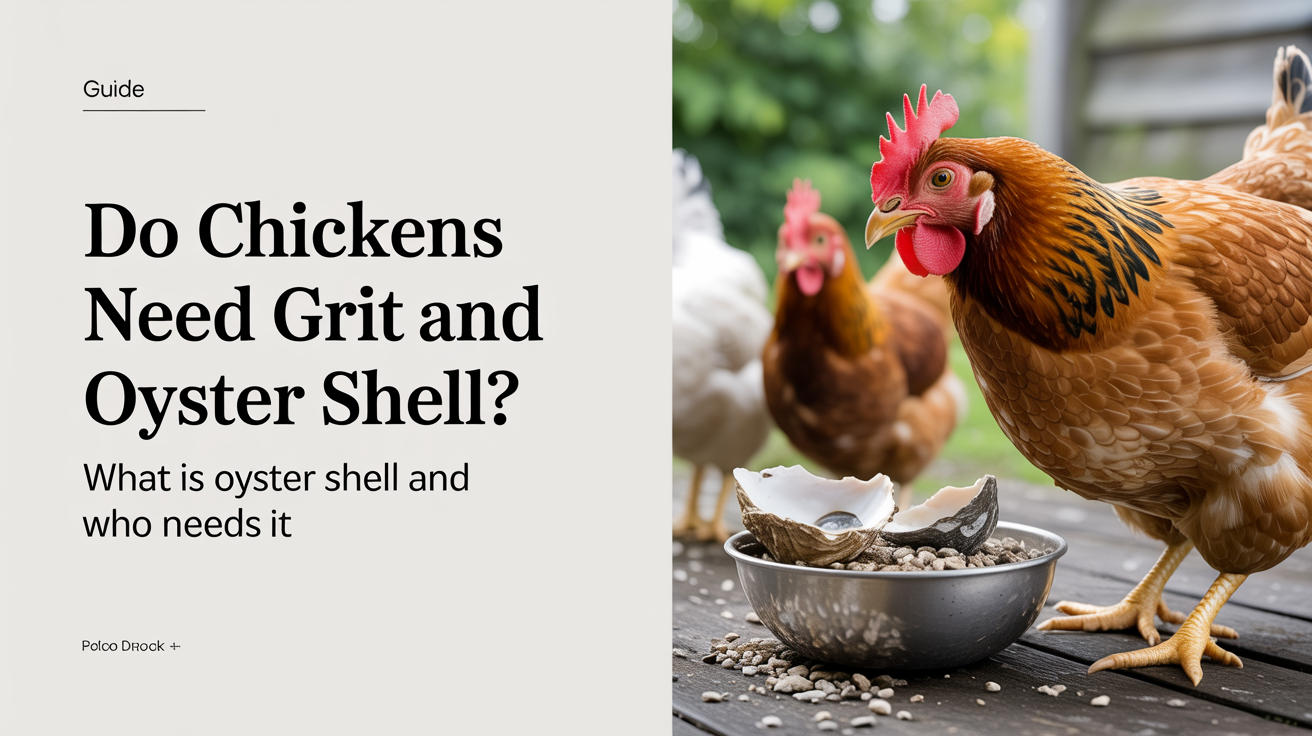
Oyster shell is crushed calcium carbonate, the raw material a hen's shell gland uses to coat a forming egg over roughly 20 hours. A standard large egg requires about 2 grams of calcium to form its shell. Laying hens need 4 to 5 grams of total calcium per day, far more than non-laying birds or roosters.
Layer feed is formulated to cover baseline calcium needs, usually around 3.5 to 4 percent calcium by weight. But individual hens vary in how much feed they eat and how efficiently they absorb calcium, so offering oyster shell free-choice on the side lets each hen take what she needs without over-supplementing the rest of the flock.
Who needs oyster shell:
- Actively laying hens, especially those producing consistently
- Older hens, whose calcium absorption efficiency drops with age
- Any hen showing soft, thin, wrinkled, or shell-less eggs
Who does not need oyster shell:
- Chicks and pullets under 18 weeks (excess calcium can stress immature kidneys)
- Roosters (same concern with excess calcium over time)
- Non-laying hens in a molt who are eating layer feed at typical amounts
Soft Eggshells: What Calcium Problems Look Like
Soft-shelled or shell-less eggs are the most visible sign that a hen is not getting enough calcium. Before blaming the diet, though, check a few other possibilities:
| Sign | Likely cause |
|---|---|
| Soft or rubbery shell, otherwise healthy hen | Low calcium intake or poor absorption |
| Shell-less egg laid in the night box | Can be normal occasionally, especially young layers |
| Thin, pitted, or ridged shells across the whole flock | Diet-wide calcium deficiency |
| Wrinkled shells on one hen, others fine | Individual absorption issue or stress |
| Soft shells despite oyster shell being available | Low vitamin D3 (affects calcium uptake) |
Vitamin D3 is worth mentioning because it is easy to overlook. Hens synthesize it from sunlight, so birds kept in dim coops with little outdoor access can develop a secondary calcium deficiency even when there is plenty of oyster shell in the dish. Natural light or a window that lets in UV is helpful. A quality layer feed includes D3, so a flock eating balanced feed and getting some sun almost never has this issue.
If soft shells persist after you have addressed calcium and light, a poultry vet or your county agricultural extension office can run blood panels and rule out infectious bronchitis or Newcastle disease, both of which can damage the shell gland.
How to Offer Grit and Oyster Shell
The method is simple: offer them separately, free-choice, in small dishes or hanging feeders.
Keep them separate. Combining grit and oyster shell means birds that do not need calcium (chicks, roosters) are forced to consume it alongside necessary grit. The two products look similar, so birds cannot sort them easily if mixed.
Free-choice works better than adding them to feed. A hen in peak lay may eat 4 to 5 grams of oyster shell per day. A hen in molt or not laying may eat almost none. Free-choice lets each bird self-regulate.
Quantities to start with: A small clay dish or hanging feeder holds enough for a flock of 6 to 8 hens for a week or more. Refill when it runs low. Grit lasts longer because birds only need it to process specific foods, not every day.
Placement: Put grit and oyster shell feeders somewhere sheltered and dry. Wet oyster shell clumps and can mold. A spot under the coop overhang or inside the run works well.
For a full picture of what to feed alongside these supplements, the guide to what to feed backyard chickens covers complete diet basics, and the breakdown of layer feed vs. starter vs. grower explains when to switch between feed types.
Grit and Oyster Shell for Mixed Flocks
If you keep roosters, younger pullets, and laying hens together, free-choice is the right approach. Lay the oyster shell out where everyone can reach it but do not force it into the feed itself. Roosters and non-layers will typically ignore the dish because they do not have the hormonal drive to seek calcium. Chicks under 8 weeks on a separate brooder diet should get chick grit but not oyster shell.
One practical note: if you keep ducks alongside your chickens, ducks that are laying need calcium too, at roughly similar levels to laying hens. They will generally use the same oyster shell dish without issue.
Frequently Asked Questions
Can I use crushed eggshells instead of oyster shell?
Yes, dried and crushed eggshells work as a calcium source. The key is to dry them thoroughly (a few minutes in a low oven) and crush them well so hens do not associate the shells with eggs and start pecking at eggs in the nest. Eggshells have roughly the same calcium content as oyster shell by weight. The practical downside is that most small flocks do not produce enough eggshells to keep up with demand, so commercial oyster shell is a reliable backup.
How do I know if my hens are eating enough oyster shell?
Watch the dish level and watch the eggs. If the oyster shell dish is going down steadily and your eggs have hard, clean shells, the system is working. If the dish barely moves and you are seeing soft shells, your hens may not have found it, it may be in a hard-to-reach spot, or something else is limiting their calcium absorption (see the vitamin D3 note above).
My pullet just laid her first egg and it had no shell. Is that normal?
It can be, especially in the first few weeks of lay. A young hen's shell gland is calibrated and can occasionally produce an incomplete egg. Offer oyster shell free-choice as soon as she starts laying (around 18 to 20 weeks for most breeds). If shell-less eggs continue past the first couple of weeks, review her feed, calcium access, and light exposure.
Can too much oyster shell hurt my chickens?
Excess calcium over long periods can stress the kidneys, particularly in birds that are not laying and therefore not using the calcium. This is why free-choice matters: laying hens self-regulate effectively. If you are adding oyster shell directly to layer feed on top of what is already in the feed, you may be providing more calcium than non-laying birds need. Stick to free-choice and let each bird decide.
Do meat birds (broilers) need grit or oyster shell?
Broilers raised on commercial pelleted feed to 6 to 8 weeks rarely need supplemental grit (their feed is already processed) and do not need oyster shell since they are not laying eggs. If you are offering whole grains, vegetable scraps, or graze access, add grit. Skip the oyster shell unless a specific situation calls for it.