Health & Care
How to Treat Mites and Lice on Chickens
How to identify, treat, and prevent chicken mites and lice: a keeper-to-keeper guide to red mites, treatment options, and coop hygiene.
Found yourself parting feathers and spotting tiny crawling specks, or noticed your hens scratching more than usual and looking rough around the edges? External parasites, namely mites and lice, are one of the most common problems backyard flock keepers run into, and they can knock a bird down fast if you don't catch them early. The good news: once you know what you're dealing with, treatment is straightforward and prevention is even simpler.
At a Glance
- Mites (eight legs) and lice (six legs) look similar at a glance but need slightly different approaches. Both cause real harm if left alone.
- Red mites hide in coop cracks and crevices by day and only feed on birds at night, so a clean-looking bird in daylight doesn't rule them out; check the coop with a flashlight after dark.
- Dust treatments (permethrin, pyrethrin) are the standard first-line fix for lice and northern fowl mite, repeated in 10 to 14 days to catch newly hatched parasites.
- Red mites live in the coop, not just on the bird, so treating only the chickens without treating the coop guarantees reinfestation within a night or two.
- Chicken lice are host-specific and will not infest people, dogs, or cats. Mites can bite humans but can't complete their life cycle on us.
- A heavy, untreated infestation can cause anemia and even death, especially in young or already-stressed birds. Don't wait out a bad case.
Mites vs. Lice: What's the Difference?
Both are external parasites that live on or near your chickens, but they behave differently and need slightly different approaches to control.
Mites are arachnids (eight legs, like spiders). The two species you'll encounter most often:
- Northern fowl mite (Ornithonyssus sylviarum): Lives directly on the bird at all life stages. You'll find them year-round, concentrated around the vent, base of the tail, and beneath the wings. Extension entomology resources describe it as the most serious external pest of poultry, with populations that actually build faster in cool weather rather than the hot months many keepers assume are riskiest. Infestations can be severe enough to cause anemia in heavy cases, and young birds build up populations especially quickly.
- Red mite / roost mite (Dermanyssus gallinae): The sneakier one. These hide in cracks, crevices, and roost joints during the day and crawl onto birds at night to feed. After a blood meal they turn red (or gray-brown before feeding), which is how they get their name. Their full life cycle can complete in as little as 10 days under warm conditions, which is why an infestation that looks minor at first can explode within a couple of weeks. Red mites chickens contend with are a summer and warm-season threat mainly, though heated coops can harbor them year-round.
Lice are insects (six legs). Chicken lice are species-specific: they don't transfer to humans or pets. They live their entire life cycle on the bird, feeding on feather debris, dead skin, and sometimes dried blood, and a full generation can turn over in as little as three weeks. Common species cluster near the vent and under the wings, and you'll often see both the fast-moving adults and their white egg clusters (nits) cemented to the base of feathers.
The practical upshot: if you find crawlies on the bird during the day, suspect lice or northern fowl mite. If the birds look fine in daylight but your coop has tiny dark specks on roost surfaces at night, suspect red mite.
How to Inspect Your Flock
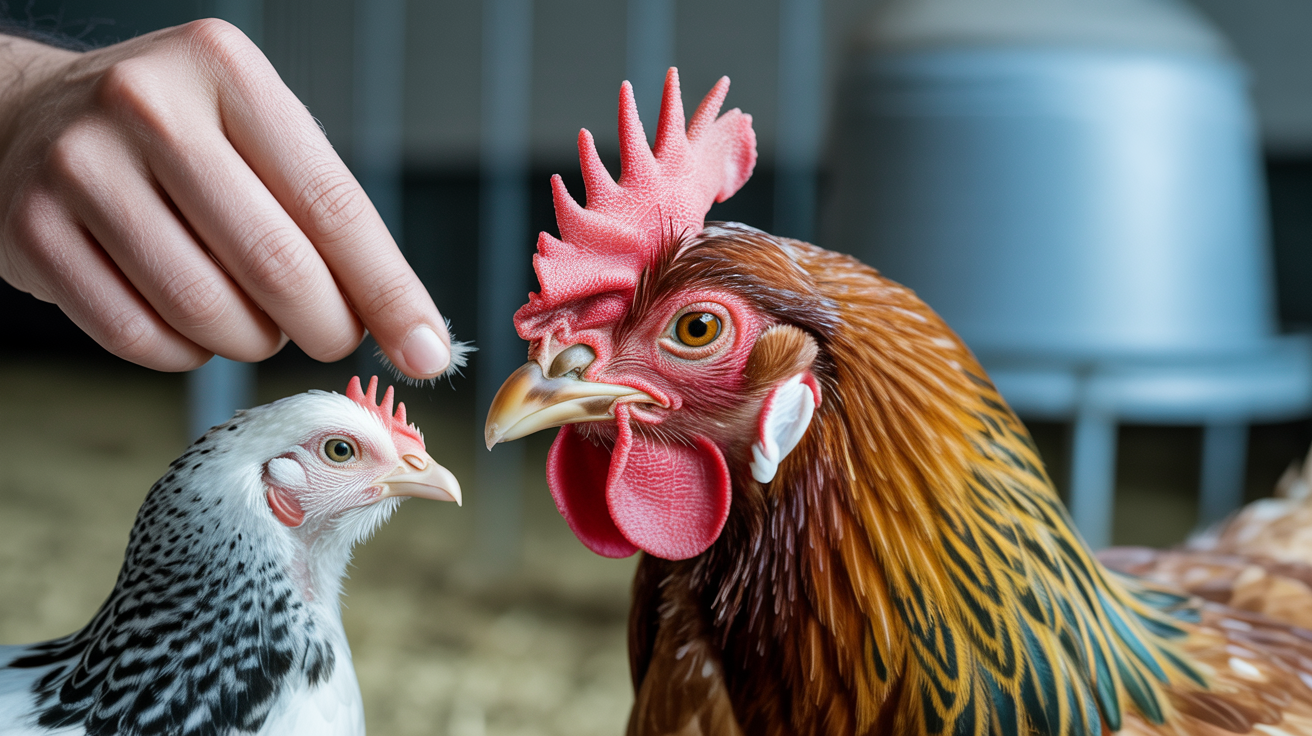
Get into the habit of doing a quick hands-on check every 2 to 4 weeks, especially during warm months. You don't need special equipment, just decent light and a willingness to part feathers.
- Pick up one bird and hold her firmly under your arm.
- Part the feathers around the vent, under each wing, and at the base of the neck.
- Look for movement (mites and lice run fast), tiny specks clinging to skin, feather-base debris, or white nit clusters stuck to feather shafts.
- For red mites, grab a flashlight after dark and check the underside of roosts, joints in the wood, and any crevice in the coop. White-to-red specks that scatter when disturbed are a near-certain ID.
Make this check a habit rather than a reaction. Populations build gradually and are far easier to knock back at the "I noticed a few specks" stage than after weeks of unchecked growth, when a bird can already be showing pale combs from blood loss.
If you spot dull feathers, pale combs, unexplained weight loss, or a drop in egg production alongside any skin findings, read through our guide on signs of a sick chicken and what to do before you decide whether this is strictly a parasite issue or whether something else is going on.
Chicken Mites Treatment: Your Options
There's no single product that handles every situation perfectly, so it helps to understand what's available.
Dust Treatments (Permethrin and Pyrethrin-Based)
Poultry dusts containing permethrin or pyrethrin are widely available at farm supply stores and are the most common first-line treatment for lice and northern fowl mite. Sprinkle or rub the dust into the feathers, concentrating on the vent area, under the wings, and around the neck. Repeat in 10 to 14 days to catch eggs that have hatched since the first treatment.
Egg withdrawal: Check the product label. Some formulations specify a withdrawal period before eggs are safe to eat; others don't. Follow the label.
Spinosad-Based Products
Spinosad is a naturally derived insecticide that's effective against lice and mites. It's available as a spray or pour-on for poultry. Many keepers find it gentler on beneficial insects in the garden when residue from treated birds is minimal. Again, label instructions govern egg withdrawal.
Diatomaceous Earth (DE)
Food-grade diatomaceous earth kills insects and mites mechanically (it damages their exoskeletons) rather than chemically, so there are no withdrawal concerns. It works best as a preventive added to dust baths rather than as a treatment for an active heavy infestation. Wear a dust mask when applying it; the fine particles aren't healthy for you or your birds to breathe in quantity.
Tackling Red Mites in the Coop
Because red mites live in the coop, not just on the bird, you have to treat the environment or they'll just reinfest your hens the next night. To get rid of chicken mites of the red variety:
- Move the birds out temporarily if you can.
- Strip out all bedding and compostable material.
- Apply a permethrin-based coop spray or a dedicated red mite product to every crack, crevice, roost joint, and corner. Pay special attention to the underside of roosts.
- Let it dry, then add fresh bedding before returning the birds.
- Repeat in 7 to 10 days. Red mites lay eggs in the coop too, and eggs can survive some treatments.
Wooden roosts are the hardest surfaces to fully clear because mites hide in the grain and joints. If a red mite problem keeps coming back despite two or three rounds of treatment, replacing wooden roosts with plastic or metal pipe is often the fix that finally breaks the cycle, since the parasites have nowhere left to hide during the day.
Treatment Comparison at a Glance
| Treatment | Best for | Egg withdrawal | Repeat needed |
|---|---|---|---|
| Permethrin dust | Lice, northern fowl mite | Check label | Yes, 10–14 days |
| Pyrethrin spray | Lice, northern fowl mite | Check label | Yes, 10–14 days |
| Spinosad | Lice, mites | Check label | Often yes |
| Diatomaceous earth | Prevention, light infestations | None | Ongoing |
| Coop permethrin spray | Red mite (environment) | N/A | Yes, 7–10 days |
How to Tell If Treatment Is Working
Recheck the flock 3 to 5 days after the first treatment. You should see far fewer live parasites, though some may still be present since eggs that survived treatment will keep hatching for a week or two. A bird whose comb color is improving and who is grooming and dust-bathing normally again is a good sign. If numbers haven't dropped noticeably by the second treatment, reconsider your product, your application technique (did you actually reach the vent and underwing skin, not just the outer feathers), or your ID.
Treating the Whole Flock at Once
Parasites spread between birds easily, so when you find an infestation on one hen, treat everyone. Isolating the affected bird is fine for observation, but all coop-mates need the same treatment on the same schedule.
This matters especially during molting season, when birds are already stressed and their immune systems are working overtime. Feather regrowth is calorie-intensive, and a mite or lice load on top of a molt can leave a bird genuinely depleted. Our guide on chicken molting: what's normal and how to help has more on supporting hens through that period.
Prevention: Making Your Coop Less Welcoming
Routine sanitation does more than any product to keep parasite pressure low.
- Dust baths are essential. Chickens instinctively dust-bathe to control external parasites. Provide a dedicated dust bath area with dry loose soil, sand, or a wood ash blend. A tub at least 12 inches deep and wide enough for one bird to spread out works well. A small amount of food-grade DE or fine wood ash in the mix adds some protection.
- Clean roosts regularly. For red mites especially, roosts are the habitat. Scrape and scrub roosts monthly; replace wooden roosts with plastic or metal pipe if red mites keep returning (they can't hide in pipe joints the same way).
- Change bedding on a schedule. Deep litter managed well is fine, but don't let it go indefinitely without topping up with fresh material and aerating. A full cleanout 2 to 4 times per year, depending on flock size and coop dimensions, limits pest harborage.
- Quarantine new birds. Bring new chickens onto the property and hold them in a separate space for at least 30 days. Inspect them thoroughly before they join the main flock. This is the single most reliable way to avoid introducing a new parasite species.
- Wild bird contact. Sparrows and other wild birds can carry mites. Cover open windows with hardware cloth and secure feed storage so you're not attracting wild birds into or right next to the coop.
Worth noting: internal parasites are a separate concern, but some keepers confuse the two when they see birds that look off. If your hens seem unthrifty despite a clean coop and treated feathers, it's worth reading up on deworming chickens: when and how to rule out worm burden.
Seasonal timing matters too. Northern fowl mite pressure tends to build through cooler months and can catch keepers off guard who only think to check in summer. Red mite and lice populations, by contrast, generally peak in warm weather when reproduction cycles run fastest. A twice-yearly deep coop clean, once heading into the cool season and once heading into the warm one, lines up well with both risk windows and is easier to remember than an arbitrary calendar date.
When to Call a Poultry Vet
Most mite and lice cases resolve with the steps above, but some situations call for professional input:
- A bird with very pale comb and wattles, lethargy, or labored breathing after a heavy mite infestation may be anemic and need supportive care beyond a dust treatment.
- You've treated twice on schedule and the infestation isn't improving.
- You're not sure of your ID (some skin conditions and fungal issues can look like parasite damage from a distance).
- You're seeing what might be scaly leg mite, which burrows under the leg scales and causes a crusty, lifted-scale appearance requiring a different approach entirely, typically smothering with petroleum jelly rather than a feather-directed dust.
A poultry veterinarian or your local agricultural extension office can confirm your ID, recommend prescription options when over-the-counter products aren't cutting it, and help you think through flock-level management.
Frequently Asked Questions
How do I know if my chickens have mites or lice?
Part the feathers around the vent and under the wings in good daylight. Lice are tan, fast-moving, and about the size of a sesame seed; look for white nit clusters at the feather base. Northern fowl mites look similar but smaller and darker. For red mites, check the coop at night with a flashlight: look for tiny red or gray-white specks on roost surfaces, especially in joints and crevices.
Can chicken mites and lice spread to humans or other pets?
Chicken lice are host-specific and will not infest humans, dogs, or cats. Northern fowl mites can transiently bite humans (you might get an itchy welt if you handle heavily infested birds) but cannot complete their life cycle on us. Red mites can bite humans who spend time in an infested coop but, again, don't persist on people. Treat the birds and the coop and you resolve the problem.
How often should I treat for mites and lice?
Treat when you find an active infestation, following the repeat schedule (10 to 14 days for most products) to catch newly hatched parasites. For prevention, a routine inspection every 2 to 4 weeks lets you catch problems early. Dust baths with DE or wood ash can be maintained as a constant low-level deterrent.
Do I need to throw out eggs during treatment?
It depends entirely on the product. Some poultry-labeled treatments have no egg withdrawal period; others specify 7 days or more. Read the product label every time and follow it. If you're unsure, withhold eggs from consumption and use them for cooking only until the withdrawal period is past.
Can a bad mite infestation kill a chicken?
Yes, in severe cases, particularly with northern fowl mite and red mite. Heavy mite loads cause blood loss that can lead to anemia, weakness, and eventually death, especially in young birds, bantams, or already-stressed hens. If a bird looks listless, has a pale comb, or seems weak alongside a heavy infestation, treat immediately and contact a poultry vet if she doesn't improve within 48 hours.
Why do mites keep coming back even after I treat the whole flock?
Almost always it's because the coop environment wasn't fully treated, or a new source was introduced. Red mites in particular can survive for weeks in cracks and crevices without feeding, so a single spray that misses a joint or corner leaves a reservoir that reinfests birds within days. Bringing in used equipment, secondhand coops, or new birds without quarantine are the other common reintroduction routes.