Coops & Housing
Chicken Coop Ventilation: Why It Matters and How to Get It Right
Good chicken coop ventilation removes moisture, ammonia, and heat while keeping drafts off your birds. Here's how to size and place vents correctly.
Poor ventilation is one of the top reasons backyard flocks run into respiratory problems, frostbitten combs, and persistently dirty bedding. Good coop airflow removes moisture from droppings and breath, clears out ammonia, and keeps summer temperatures from cooking your birds alive. The fix isn't complicated, but the details matter, and getting them wrong costs you birds.
Here's what actually works, pulled from years of tweaking vents across different climates and coop styles.
At a Glance
- Rule of thumb: 1 square foot of vent per 10 square feet of floor, closer to 1 per 4–5 square feet in humid climates or crowded coops.
- Vents belong high on the walls, above roost height, never blowing directly on sleeping birds.
- Winter goal is dry, not warm; a dry coop at 10°F is safer than a damp coop at 28°F.
- Heat stress starts around 85°F (panting begins) and turns dangerous as temperatures push toward 100°F, per University of Minnesota Extension.
- Ammonia smell or wall condensation in the morning both mean the same thing: not enough air exchange.
- Insulation without ventilation makes moisture problems worse, not better.
Why Coop Ventilation Is Non-Negotiable
Chickens produce a surprising amount of moisture. A single hen exhales and excretes enough water vapor to raise humidity noticeably overnight in a small, sealed coop. Multiply that by a flock of six or eight birds, and by morning you can have condensation dripping from the ceiling.
Wet bedding breeds bacteria and a buildup of ammonia that irritates the respiratory tract, making birds more susceptible to Mycoplasma, infectious bronchitis, and other airborne diseases. In winter, persistent dampness causes frostbite far more reliably than cold temperatures alone. A dry coop at 10°F is safer than a humid coop at 28°F.
Ventilation also clears heat in summer. Chickens don't sweat. They pant and hold their wings away from their bodies to dump heat. University of Minnesota Extension's guide to preventing heat stress in poultry puts numbers on this: birds sit in a comfortable thermoneutral zone of roughly 60 to 75°F, start reducing feed intake and panting as temperatures climb toward 85°F, and face lethal core-temperature risk as ambient air approaches 100°F. Panting itself generates additional muscle heat, which is part of why a poorly ventilated coop in a heat wave can spiral quickly. Good coop airflow isn't a luxury in July; it's life support.
How Much Ventilation Do You Actually Need
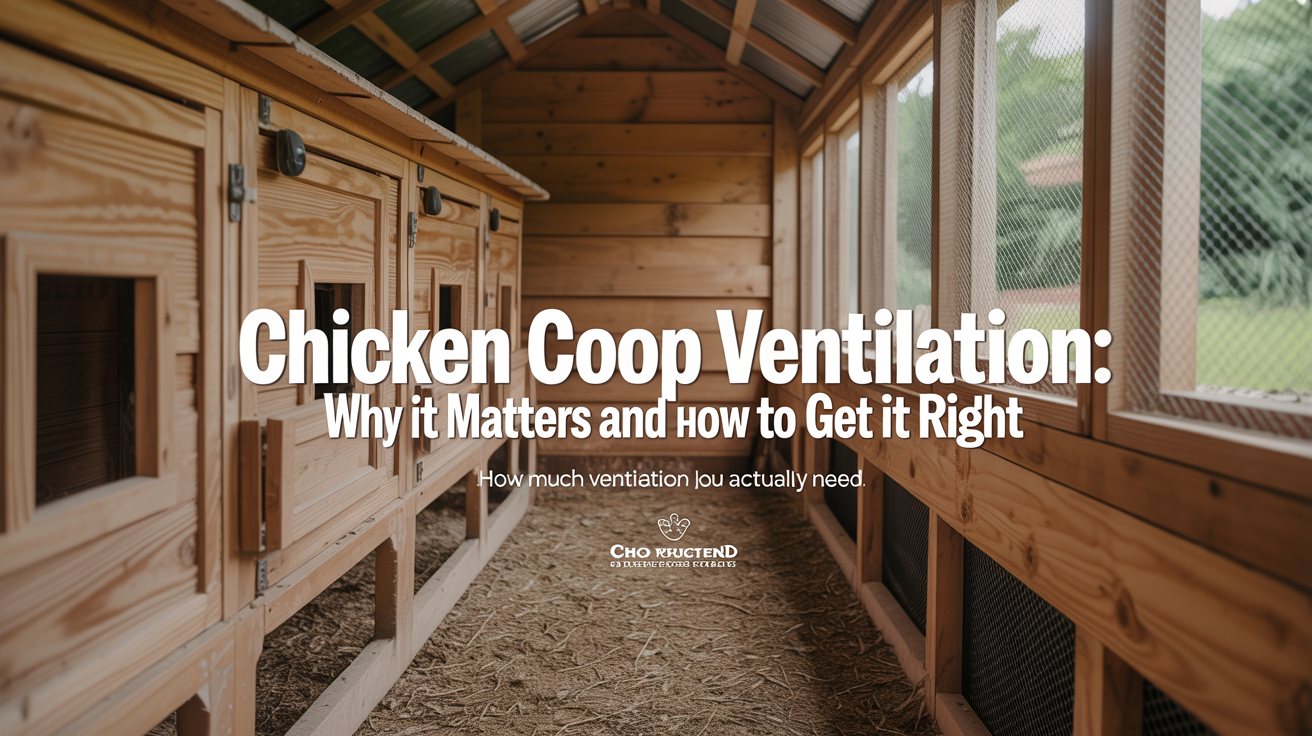
The standard rule-of-thumb is 1 square foot of vent opening per 10 square feet of floor area, but that's a floor, not a ceiling. In humid climates or in coops with more birds per square foot, you'll want to aim closer to 1 square foot of vent per 4–5 square feet of floor.
Vent area refers to the open, unobstructed space after any mesh or hardware cloth is subtracted. A 12x12-inch vent opening screened with half-inch hardware cloth loses roughly 15–20% of its effective area. Account for that when you're cutting openings.
The table below translates the rule of thumb into actual vent area for common coop sizes, so you're not doing the math from scratch:
| Coop Floor Area | Minimum Vent Area (1:10 rule) | Humid/Crowded Coop (1:4–5 rule) |
|---|---|---|
| 16 sq ft (4x4) | 1.6 sq ft | 3.2–4 sq ft |
| 32 sq ft (4x8) | 3.2 sq ft | 6.4–8 sq ft |
| 48 sq ft (6x8) | 4.8 sq ft | 9.6–12 sq ft |
| 64 sq ft (8x8) | 6.4 sq ft | 12.8–16 sq ft |
Before sizing vents, make sure you know how much floor space your birds actually have. Our guide on how big a chicken coop should be covers the minimum square footage per bird and explains why cramming birds together compounds every ventilation problem.
Vent Placement: High Up and Away From Roosts
The single most important rule: vents go high on the walls, above the roost bars. Chickens sleep on roosts, and a steady breeze blowing across them at roost height is a draft, not ventilation. Drafts chill birds, cause respiratory illness, and stress the flock.
Place vents in the upper 12–18 inches of your coop walls, ideally on opposing walls or at least on two different walls to encourage cross-airflow. The physics are simple: warm, moist air rises. If your vents are up high, that air exits naturally. Ridge vents or soffit openings add another exit point and work well on pitched roofs.
South-facing vents catch prevailing summer breezes in most of North America. North-facing openings can create reliable cross-ventilation. Avoid putting large openings on the north side in cold climates if you're planning to leave them open year-round, since prevailing winter winds often come from that direction.
Hardware cloth (half-inch mesh) over every opening keeps predators out. Welded wire is stronger than chicken wire and won't deform as easily. Hinged covers let you close vents partially in severe weather without blocking them completely.
Winter Coop Ventilation: The Biggest Misunderstanding
Most new keepers seal their coops tight for winter, thinking warmth matters most. This is backwards. The goal in winter is to keep the coop dry, not warm. Cold dry air is far safer for chickens than warm moist air.
Healthy adult chickens in full feather handle temperatures well below freezing. Standard dual-purpose breeds like Plymouth Rocks, Wyandottes, and Rhode Island Reds can tolerate 0°F with no supplemental heat if the coop is dry and draft-free. Bantams and Mediterranean breeds (Leghorns, Anconas) are less cold-hardy and may appreciate a low-wattage heat source in sustained temperatures below 20°F, but good ventilation remains essential even then.
In winter, keep upper vents open unless conditions are extreme. On nights below 0°F with high winds, you can close vents partway, but never seal the coop. A closed pop door, vents cracked rather than fully open, and dry bedding will almost always do more good than a heat lamp. Heat lamps also present a serious fire risk.
University of Minnesota Extension's cold-weather care guide frames the tradeoff the same way: seal drafts that hit birds directly, but keep air exchange running, because moisture and cold together (not cold alone) are what cause frostbite. Their recommended methods include partially opened south-facing windows, roof vents, a strip of burlap over an opening to break direct wind while still allowing airflow, and simply propping doors open on milder days.
A quick diagnostic: if you walk into your coop in the morning and smell ammonia, ventilation is inadequate. If you see frost or condensation on the walls and ceiling, same conclusion. If the litter is dry and there's no strong smell, your airflow is working.
| Sign | What It Probably Means |
|---|---|
| Ammonia smell in the morning | Not enough air exchange; add vent area |
| Condensation on walls/ceiling | Humidity trapped; vents placed too low or too few |
| Frostbitten comb tips on multiple birds | Drafts at roost level; reposition vents higher |
| Wet, matted litter | Moisture accumulating; increase bedding depth and airflow |
| Birds panting with wings out in summer | Heat buildup; add cross-ventilation or shade |
| Chronic respiratory rattles in the flock | Sustained ammonia exposure; vet or extension office consult |
Retrofitting an Existing Coop
If your coop is already built, adding ventilation is usually straightforward. The most common retrofit is cutting vent openings in the upper gable ends, which are easy to reach, naturally sit above roost height, and let you add louvered covers that shed rain.
For coops without gable ends (shed-style rooflines), cut vents in the upper 6–8 inches of the front and back walls. Cover with hardware cloth stapled and screwed securely. Predators will work at any loose edge, so use 1-inch wood screws through a frame, not just staples.
If you built the coop from scratch, check our beginner's coop building guide for how to incorporate ventilation into the framing from the start. It's much easier to plan for vent placement before the walls go up.
For temporary relief during a heat wave, a basic box fan blowing across the coop (not directly at roosting birds) can drop interior temperatures by 10°F or more. This isn't a substitute for permanent ventilation, but it buys time. Position the fan to pull hot air out rather than push warm outside air in, and run it only when temperatures warrant. Pair the fan with extra waterers and, on the worst days, frozen water bottles set in the run so birds can rest against something cool.
Tying Ventilation to Coop Design and Nest Box Placement
Ventilation interacts with your whole coop layout. Nest boxes tucked into a dark, low corner tend to trap moisture and get stuffy, which discourages laying and promotes mold in litter. Good airflow through the coop body helps the nest area stay drier. For guidance on nest box sizing and placement in relation to the rest of the coop, see our piece on nesting boxes: how many, what size, and where to put them.
Floor-to-ceiling height also matters. Coops under 4 feet tall give you less vertical space for stratification, meaning roosts and vents end up closer together. If you're planning a new build, aim for at least 5–6 feet of clearance so you can place roosts at 2–3 feet and vents well above them.
The taller the coop, the more the "stack effect" does the work for you: warm, ammonia-laden air rises and pulls fresh air in through lower openings without any fan involved. A 6-foot-tall coop with vents near the peak and a small gap under the pop door will often out-perform a squat, 4-foot coop with the same total vent area, simply because there's more vertical distance for the temperature difference to drive airflow. If you're stuck with a low, wide coop design, compensate by adding a ridge or gable vent even if the wall vents already meet the square-footage target.
Frequently Asked Questions
Can I leave coop vents open in rain?
Yes, if they're positioned correctly. Vents in gable ends or on the upper side of walls (not the rain-facing low wall) typically stay dry enough. A 6-inch overhang above a vent opening keeps most rain out. If water is blowing in, add a louvered baffle or adjust the angle of the cover. A little splashing near a vent is fine; standing water inside the coop is not.
Do I need powered ventilation or fans year-round?
Most small backyard coops (under 100 square feet) with correctly sized and placed passive vents do fine without fans. Fans become useful in hot, humid climates where there's little breeze, or in coops where the layout makes cross-ventilation impossible. If you add a fan, wire it to a thermostat set to kick on at 85°F (the point where University of Minnesota Extension notes birds start panting) rather than running it constantly.
My coop smells fine but my birds have respiratory rattles. Could it still be ventilation?
It's possible, but respiratory rattles in chickens have several causes beyond ammonia: Mycoplasma gallisepticum, infectious bronchitis, aspergillosis (fungal, often from moldy litter), and more. Don't diagnose this yourself. Any flock-wide respiratory symptoms warrant a call to a poultry veterinarian or your local agricultural extension office, especially before you consider any treatment.
How do I ventilate a very small coop (under 16 square feet)?
Small coops are actually harder to ventilate well because the ratio of birds to air volume is high. Make sure vents total at least 10–15% of floor area. On a 4x4-foot coop, that means at least 1.5–2 square feet of vent opening after accounting for mesh. If you can't get there with wall vents, a ridge vent along the peak of the roof adds significant air movement without creating drafts at roost level.
Should I insulate my coop walls to help with temperature and moisture?
Insulation helps slow heat gain in summer and heat loss in winter, but it doesn't replace ventilation. In fact, a well-insulated but poorly ventilated coop traps moisture even more effectively, which accelerates mold and ammonia buildup. If you insulate, cover all exposed foam with plywood or another rigid surface. Chickens will peck foam obsessively and can ingest enough to cause blockages.
How much does closing vents at night actually save in warmth?
Less than most keepers expect, and it isn't worth the moisture trade-off. Chickens in full feather generate their own body heat while roosting shoulder to shoulder, and that warmth escapes as vapor that needs somewhere to go. Closing vents traps that vapor instead of the heat, which is exactly the condensation-and-frostbite cycle described above. Crack vents narrower on the coldest nights if you're worried, but keep some airflow moving at all times.