Coops & Housing
How Big Should a Chicken Coop Be? Space per Bird
Learn exactly how much space chickens need inside the coop and in the run, with square footage guidelines by flock size and breed type.
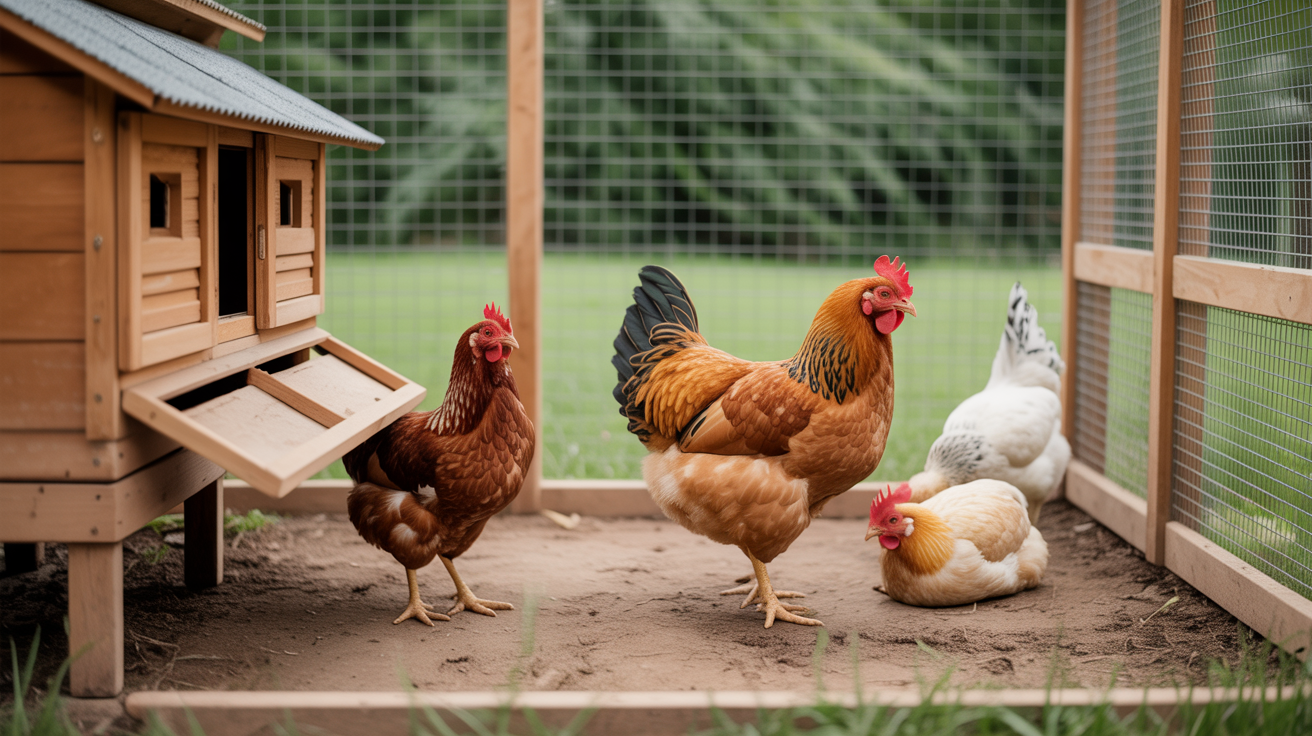
The short answer: plan on at least 4 square feet of indoor coop space per standard-size chicken, plus a minimum of 10 square feet of outdoor run per bird. Those numbers are the practical floor, not an aspirational goal. Go bigger whenever you can, because crowding is one of the fastest ways to create sick, stressed, feather-picked birds.
Getting the math right before you build saves you from tearing walls out later. Here's what actually matters.
The Basic Square-Footage Rules
Space guidelines get repeated so often they start to feel like arbitrary numbers. They're not. They come from decades of backyard-keeper experience and welfare research showing that below certain thresholds, chickens start showing chronic stress behaviors: feather pecking, egg eating, aggression, reduced laying, and increased disease spread.
Indoor coop space (sleeping + roosting area):
| Bird size | Minimum sq ft per bird | Comfortable sq ft per bird |
|---|---|---|
| Bantam (Silkie, Serama, Dutch) | 2 sq ft | 3–4 sq ft |
| Standard light breed (Leghorn, Ancona) | 3–4 sq ft | 5 sq ft |
| Standard heavy breed (Plymouth Rock, Orpington, Australorp) | 4 sq ft | 5–6 sq ft |
| Dual-purpose large breed (Jersey Giant, Brahma) | 6 sq ft | 8 sq ft |
Outdoor run space (attached run or day range):
| Setup | Sq ft per bird |
|---|---|
| Attached enclosed run only | 10 sq ft minimum, 15+ preferred |
| Run + supervised free range | 10 sq ft run is fine with daily range time |
| Full-time confinement (no free range) | 15–20 sq ft run minimum |
These are per-bird numbers. A flock of 6 standard hens needs at least 24 sq ft of coop floor and 60 sq ft of run. That works out to a 4×6 ft coop with a roughly 6×10 ft run at the absolute minimum.
Why Crowding Causes Real Problems
When birds are packed too tightly, the consequences stack up fast:
Ammonia buildup. A cramped coop traps moisture and manure gases. Ammonia at levels chickens experience daily in an undersized space irritates their respiratory tract, and chronic exposure leads to respiratory infections that are hard to shake. Good coop ventilation helps, but no amount of airflow fully compensates for too many birds in too little space.
Pecking order stress. Chickens have a genuine hierarchy and they need room to avoid each other. Lower-ranked birds in a crowded run can't escape dominant hens, which leads to escalating pecking that can turn bloody quickly. Once a bird draws blood, the rest of the flock often joins in — a behavior that's extremely hard to stop once it starts.
Disease transmission. Coccidiosis, Marek's disease, respiratory illnesses: nearly all common flock diseases spread faster through dense populations. The math is straightforward: fewer birds per square foot means lower pathogen loads in the environment and more space between birds.
Laying drops. Hens under social stress lay fewer eggs. If your production suddenly drops and you haven't changed feed or lighting, overcrowding is one of the first things to check.
Roost Space Matters as Much as Floor Space
Floor space calculations often crowd out another critical number: linear roost space. Chickens sleep on roosts, not on the floor, and they need enough bar to park comfortably without elbowing each other.
Standard rule: 8–10 inches of roost bar per standard hen, 6 inches per bantam. For a flock of 8 standard hens, that's at least 64–80 inches (roughly 5.5–6.5 feet) of roost bar.
A few practical notes on roost design:
- Mount roosts 18–24 inches off the floor minimum, and higher if your breed is a good flier (Leghorns and most Mediterranean breeds like to go up).
- Roosts should be higher than nesting boxes. If boxes are at the same height or higher, hens sleep in them and soil the nesting material.
- Use 2×4 lumber laid flat (3.5-inch face up). The wide flat surface lets chickens cover their toes on cold nights, which matters more than you'd expect in climates that drop below 20°F.
For details on sizing and placing nesting boxes alongside roosts, see our guide on nesting boxes: how many, what size, and where to put them.
Run Design: It's Not Just About Square Footage
The run square-footage number is necessary but not the whole picture. How the space is arranged matters almost as much as how much there is.
Bare dirt runs go bad fast. A 60-sq-ft run with 6 hens will be stripped to bare dirt and compacted within a few weeks if you leave it plain. Bare dirt runs concentrate manure, breed flies, and create mud problems. A few things help:
- Deep litter in the run (straw, wood chips, fall leaves) gives birds something to scratch through and helps dilute manure. Refresh it rather than fully replacing; the microbial activity helps break down waste.
- Rotation or expansion. If you can fence off a second section and rotate access, your grass and soil will recover between rotations.
- Shade and enrichment. A run with nowhere to shelter from hot sun or rain is stressful even if it's big enough. A simple tarp or a lean-to panel makes a real difference in summer and on rainy days.
- Vertical space. Ramps, stumps, and low platforms let birds claim territory at different heights and reduce flat-surface crowding.
None of this replaces square footage, but a well-designed run of 12 sq ft per bird often functions better than a barren 20-sq-ft run.
Adjusting for Your Climate and Management Style
The standard 4-square-feet-per-bird rule assumes birds have access to an outdoor run most days. If your birds spend significant time locked inside (for winter weather, predator pressure, or because you haven't built the run yet), those numbers need to go up.
Cold climates (extended confinement winters): Add 1–2 sq ft per bird over the minimum. Birds locked inside for weeks at a time need space to move around without constant friction with each other.
Hot climates: The opposite pressure applies outside. Shade and airflow in the run matter more than raw square footage in summer. A 10-sq-ft run with a shade structure is often better than 15 sq ft of baked dirt.
Free-range supplemented flocks: If your birds have full yard access from morning to dusk, you can work with run minimums during the day because the run is mainly for those hours when you need them contained. The coop size doesn't change; they still all have to sleep inside.
Mixed flocks (bantams + standards): Use the larger bird's space requirements for the whole flock. Bantams typically bear the brunt of aggression in mixed setups and need escape room more than large breeds do.
Planning Your Coop: Common Flock Sizes
Here's how the numbers play out for typical backyard flock sizes:
3–4 hens (starter flock):
- Coop: 12–16 sq ft interior floor space (roughly 4×4 ft)
- Run: 30–40 sq ft minimum (roughly 5×6 to 5×8 ft)
- Roost bar: 30–40 inches
6 hens (most common backyard flock):
- Coop: 24 sq ft interior (roughly 4×6 ft or 3×8 ft)
- Run: 60–90 sq ft (6×10 to 6×15 ft)
- Roost bar: 48–60 inches
10–12 hens:
- Coop: 40–48 sq ft interior (roughly 6×8 ft)
- Run: 100–150 sq ft (10×10 to 10×15 ft)
- Roost bar: 80–96 inches
One thing to plan for: flock expansion. If you buy 6 chicks today, you'll likely want 10 birds by next year. Oversizing by 20–30% on your first build is almost always cheaper than adding on later. Our beginner's guide to building a chicken coop walks through how to design for that flexibility from the start.
Signs Your Current Coop Is Too Small
If you have an existing setup and you're not sure whether it's adequate, your chickens will tell you. Watch for:
- Feather loss on backs and heads that isn't explained by molting season
- Persistent pecking or chasing between birds you don't normally see fighting
- Eggs laid on the floor rather than in boxes (hens avoiding overcrowded box areas)
- Ammonia smell when you open the coop in the morning, even after a recent clean
- Dirty, compressed litter that can't keep up with the manure load despite regular turning
- Lower egg production across the flock without a dietary or lighting explanation
Any of these is worth investigating. Overcrowding is fixable: either expand the space or rehome a few birds to bring the ratio back into range.
Frequently Asked Questions
How many square feet does one chicken need?
A standard-size hen needs at least 4 square feet of indoor coop space and 10 square feet of outdoor run space. Heavier breeds like Buff Orpingtons or Barred Rocks benefit from 5–6 sq ft inside. Bantam breeds can work with 2–3 sq ft indoors, but still need 8–10 sq ft of run.
Can I keep chickens in a smaller coop if they free-range all day?
Yes, to a point. If birds are outside from sunrise to late afternoon, you can work closer to the minimum indoor square footage because they're only using the coop for sleeping and laying. The caveat: if you're locking them up for extended periods for any reason, the minimum numbers apply as written.
What's the minimum coop size for 4 chickens?
For 4 standard hens, the practical minimum is 16 square feet of floor space (a 4×4 ft footprint), though a 4×6 ft coop gives you much more comfortable margins. Pair that with at least a 4×10 ft or 5×8 ft run. Going smaller than 16 sq ft interior for 4 full-size birds creates chronic stress conditions.
Do chickens need more space in winter?
Technically the square footage requirement doesn't change, but the practical reality does. If your birds are spending more time indoors due to snow, rain, or cold, they need that extra space to move around without conflict. Keepers in cold climates often find that what works in summer creates problems in January. Planning for 5–6 sq ft per bird indoors if you live somewhere with hard winters is good insurance.
Is a smaller prefab coop from a feed store accurate for the chicken count on the label?
Usually not. Most prefab coops sold at farm supply stores label their capacity optimistically. A coop listed for "4–6 hens" often has a floor space that comfortably holds 2–3 standard birds by the guidelines above. Always check the actual interior dimensions and do your own math before buying.
Do different breeds need different amounts of space?
Yes, and it matters more than many beginners expect. Active, lightweight Mediterranean breeds like White Leghorns handle a smaller coop footprint reasonably well because they spend so much time outdoors. Heavy, calm breeds like Buff Orpingtons, Black Australorps, and Brahmas are less active and spend more time near the feeder and roost, so they benefit from 5–6 sq ft of indoor space per bird. Silkies and other bantam breeds are compact enough that 2–3 sq ft works, but they're also lower in the pecking order of mixed flocks and need enough room to get away from larger birds when needed.