Coops & Housing
Nesting Boxes: How Many, What Size, and Where to Put Them
Learn how many chicken nesting boxes you need, the right size, best bedding choices, and exactly where to mount them for happy, productive hens.
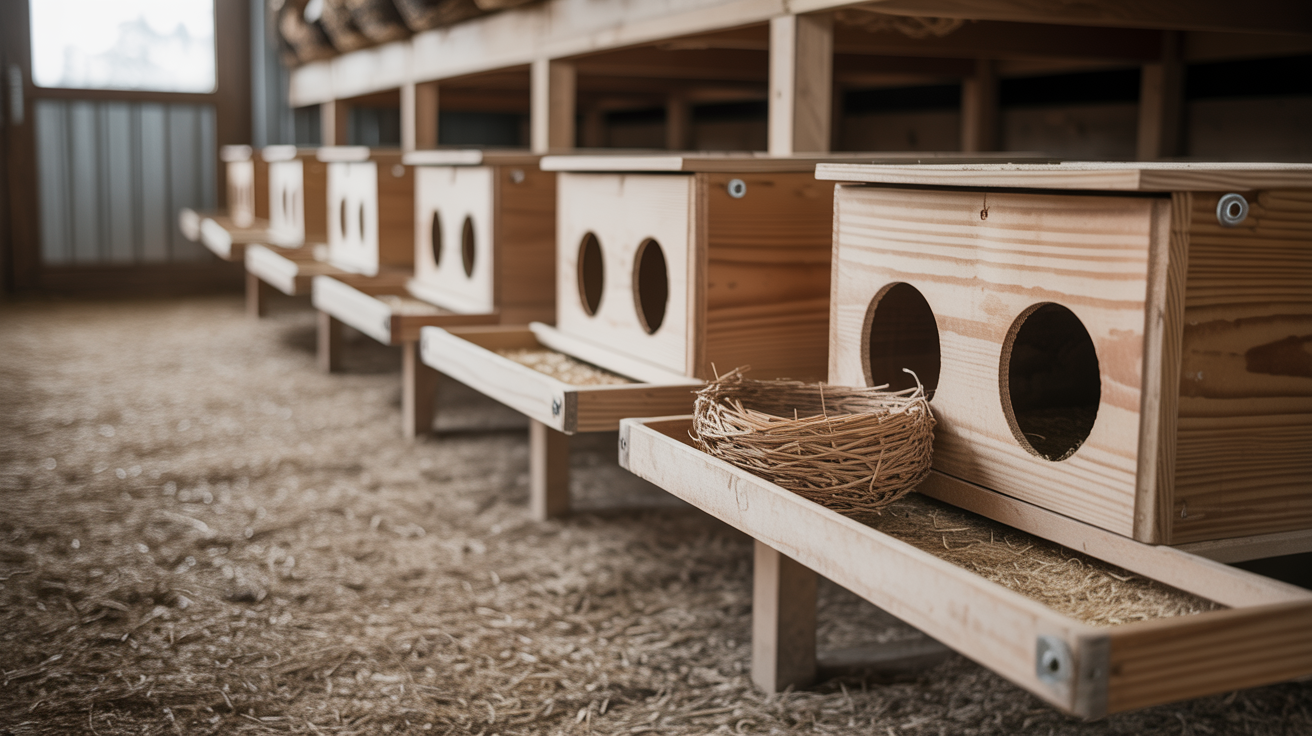
Hens are creatures of habit, and where they lay matters more than most new keepers expect. Get the nesting boxes right and your girls will use them consistently, your eggs will stay clean, and you'll avoid the frustration of hunting for hidden clutches in the corner of the run. Get them wrong and you'll end up with dirty eggs, broken shells, or hens sleeping (and pooping) where they're supposed to lay. This guide covers the numbers, dimensions, bedding, and placement that actually work in a backyard flock.
At a Glance
- One box per 4 to 5 hens is the standard ratio; never go below one box per 2 hens or above a single box for the whole flock.
- Standard large-fowl boxes run 12x12x12 inches; bantams can use 10x10x10, heavy breeds do better at 14x14x14.
- Boxes must sit lower than the roost bars, or hens will sleep (and defecate) in them instead of laying.
- Pine shavings or excelsior pads beat straw and hay for keeping eggs clean and dry.
- Refresh bedding every 1 to 2 weeks, spot-clean daily, and expect hens to crowd into one "favorite" box regardless of how many you provide.
- Fake eggs speed up the training process for pullets who haven't figured out where to lay yet.
How Many Nesting Boxes Does a Flock Need?
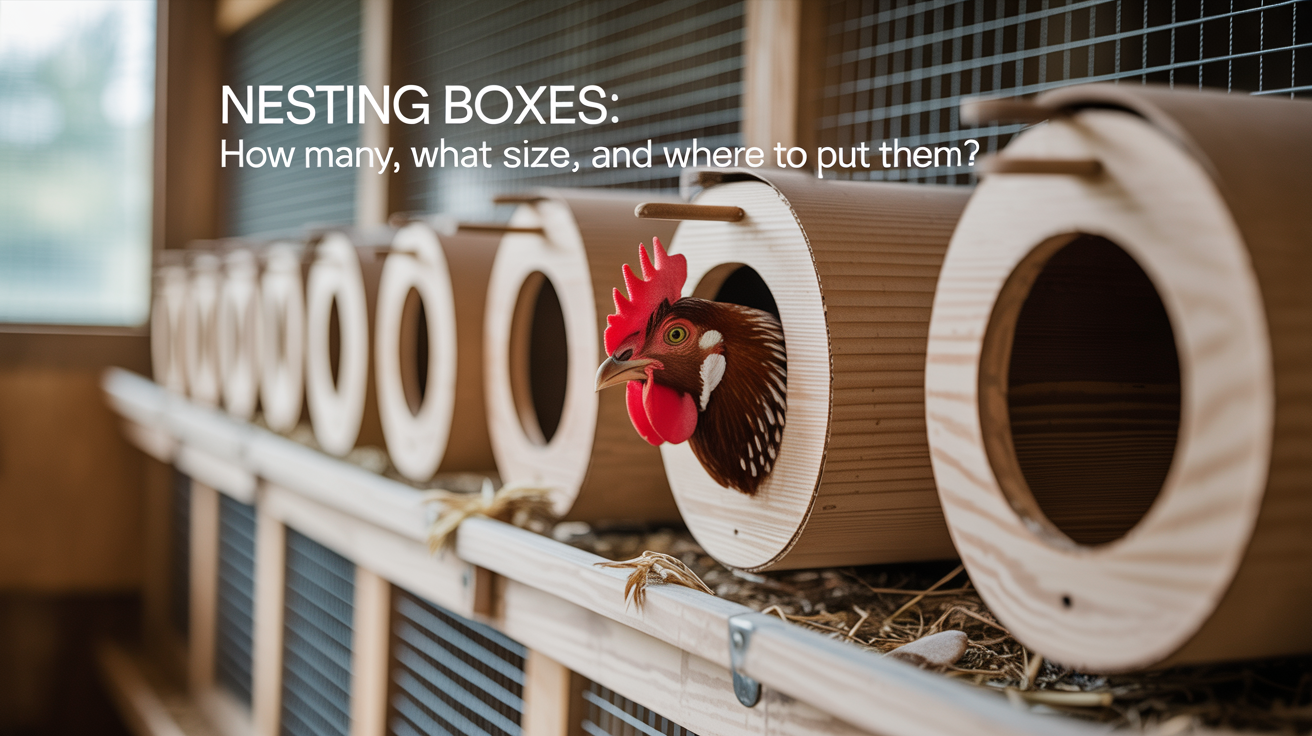
The standard recommendation is one nesting box for every four to five hens. That ratio works well for most backyard flocks and is backed by decades of small-flock management experience. A flock of 8 hens needs at least 2 boxes; 12 hens need 3. The University of Minnesota Extension's guide to raising layers uses the same figure, confirming this isn't just backyard folklore passed between keepers online.
Penn State Extension frames the math slightly differently in its guide to small-scale egg production: two nests for the first four hens, then one additional nest for every four hens after that. Run the numbers and the two formulas land close together for most flock sizes; either is a reasonable target.
Here's the thing, though: hens have strong preferences, and they often pile into the same box regardless of how many you provide. You might set up 4 perfectly good boxes and watch every hen queue up for the same one on the left. That's normal chicken behavior, not a sign you did something wrong.
A few practical notes:
- Don't exceed one box per two hens. More boxes than that wastes coop space and gives hens more places to sleep (which leads to soiled bedding in boxes).
- Minimum of 2 boxes for any flock, even if you only have 3 or 4 hens. One box going out of service for cleaning or repairs should never leave you boxless.
- Bantams vs. large fowl: bantam flocks can share fewer boxes because the birds are smaller and lay smaller eggs, but the one-to-four ratio still applies.
For more on how overall coop square footage affects hen comfort, see our guide on how big a chicken coop should be.
What Size Should a Nesting Box Be?
For standard large-fowl breeds (Plymouth Rocks, Rhode Island Reds, Australorps, Wyandottes, and most production layers), a 12-inch wide by 12-inch deep by 12-inch tall box is the industry standard. Many keepers run 13x13 or 14x14 with zero complaints. Bigger is generally fine; smaller is where problems start.
Size by Breed Type
| Breed Size | Recommended Box Dimensions | Boxes per Bird |
|---|---|---|
| Bantam (Silkies, Seramas, d'Uccles) | 10" W x 10" D x 10" T | 1 per 5–6 hens |
| Standard large fowl | 12" W x 12" D x 12" T | 1 per 4–5 hens |
| Heavy breeds (Jersey Giants, Brahmas) | 14" W x 14" D x 14" T | 1 per 4 hens |
| Mixed flock | 12" W x 12" D x 12" T (most can adapt) | 1 per 4–5 hens |
If you're running a mixed flock with both bantams and large fowl, size for the largest bird. Bantams will figure it out; a Jersey Giant crammed into a 10-inch box will stop using it entirely.
Depth and Lip Height
The 12-inch depth measurement is important for egg safety. A shallow box means eggs roll toward the entrance and get stepped on. Most commercial and DIY designs add a 3- to 4-inch lip (or roll-out lip) across the front. That small barrier keeps eggs and bedding inside without making it hard for a hen to step in.
Where to Put Nesting Boxes in the Coop
Placement determines whether hens use the boxes or ignore them. A few non-negotiables:
Lower than the roost bars. Hens roost at the highest point available. If your nesting boxes are mounted at the same height as the roosts, or higher, hens will sleep in them. Aim for boxes 18 to 24 inches off the floor, and set roost bars at least 6 to 8 inches above that. See our full breakdown in building a chicken coop from scratch for how to lay out the interior.
Darker and quieter than the main coop space. Hens want privacy when they lay. A box in a well-lit, high-traffic area will get avoided. Face boxes away from windows, or add a short curtain (a strip of burlap or canvas works fine) to reduce light at the entrance.
Away from the main door. Foot traffic and drafts near the entrance stress laying hens. Mount boxes on a side or back wall.
Accessible from outside if possible. An external egg door (also called a hen door or egg-collection door) on the back wall lets you collect eggs without disturbing the flock. Not essential, but it makes daily chores faster and reduces stress on broody hens.
Off the floor. Ground-level boxes collect more shavings, moisture, and droppings blown in from the coop floor. Elevating boxes 18 to 24 inches up also discourages rodents from nesting in the bedding.
A worked example helps make the abstract numbers concrete. Say you're building a coop for 10 standard-size hens (Rhode Island Reds and Australorps):
| Step | Calculation | Result |
|---|---|---|
| Boxes needed (1 per 4–5 hens) | 10 hens ÷ 4.5 | 2 to 3 boxes |
| Box size | Standard large fowl | 12" x 12" x 12" each |
| Total footprint | 3 boxes x 12" wide | 36 inches of wall space |
| Mounting height | Below roost bars | 18–24 inches off floor |
| Roost height (for comparison) | 6–8 inches above boxes | 26–32 inches off floor |
That gives you a compact bank of three boxes that fits comfortably along one wall without eating into floor space the hens need for scratching and dust bathing.
Nesting Box Bedding: What Works and What Doesn't
The goal of nesting box bedding is simple: cushion the eggs so they don't crack, absorb moisture so shells stay clean, and stay put instead of getting scratched out by hens. A few options do this reliably.
Pine shavings (medium or large flake) are the most common choice. They're affordable, widely available, absorb moisture well, and easy to replace. Avoid cedar shavings because the aromatic oils (phenols) can irritate a hen's respiratory tract and, with prolonged exposure, have been linked to liver stress in poultry and other small animals. Pine has none of these compounds and is the material extension programs consistently recommend for coop and nest bedding.
Straw is traditional and works fine if you change it frequently. The hollow shafts can trap moisture and harbor mites if left too long. Loose straw also gets scratched out of boxes faster than shavings.
Hay is a poor bedding choice. It molds quickly when damp and provides little cushioning compared to shavings or straw.
Nesting box pads (precut pads made of excelsior, hemp, or similar material) are worth considering for keepers who want less mess. They stay in place better than loose bedding and many are washable. Pricier up front, but they cut down on daily tidying.
Herbs like lavender, mint, or rose petals are sometimes layered on top of shavings. They don't harm hens and may have mild pest-deterrent properties, though the evidence is mostly anecdotal. Treat them as a nice-to-have, not a substitute for fresh bedding.
Regardless of what you use, plan to refresh box bedding every one to two weeks at minimum, and spot-clean any soiled sections daily. A hen that finds a dirty, wet box will go elsewhere.
Keeping Hens Out of Nesting Boxes at Night
Sleeping in nesting boxes is one of the more common problems keepers run into, especially with young pullets who haven't fully figured out the coop pecking order. The solution is almost always the same: make sure roost bars are higher than the boxes, and block box entrances at dusk for the first few weeks.
Physically placing young pullets on the roost bars each evening for 5 to 7 nights breaks the habit for most birds. It's tedious, but it works. If an adult hen repeatedly sleeps in the box, check whether the roost space is adequate (10 to 12 linear inches per bird) and whether she's being bullied off the roosts by flock mates. Bullying is easy to miss during the day; watch the coop at dusk for a few evenings and you'll usually catch the dominant hen blocking a subordinate's access to the roost.
Soiled nesting box bedding is the direct downstream problem: a hen sleeping in the box deposits manure all night, which contaminates eggs and requires more frequent bedding changes. Fixing the sleeping behavior is faster than fighting dirty bedding indefinitely. If you're closing off boxes at night, use a simple hinged panel or a piece of cardboard wedged in place rather than anything that could trap a hen inside if she slips in unnoticed. Always open boxes back up at first light so early layers aren't locked out.
Signs Your Setup Needs Adjusting
Most nesting box problems give you early warning before they turn into serious flock issues. Watch for:
- Eggs on the coop floor: hens are avoiding the boxes. Check height, lighting, and bedding condition.
- Broken eggs in boxes: too many hens sharing too few boxes, or the lip isn't tall enough.
- Dirty or smeared eggs consistently: bedding needs refreshing more often, or hens are roosting in boxes.
- Hens laying in the run or yard: boxes may be too bright, too cramped, or positioned near a noise source (like a door that slams).
- Soft-shelled or no-shell eggs: this is a nutritional or health issue, not a nesting box problem. Offer free-choice oyster shell and consult a poultry vet or your local agricultural extension office if it persists across multiple hens.
- One box gets used constantly while the others sit empty: normal hen behavior in small flocks, but if it's causing a backup during peak laying hours (typically mid-morning), try moving a neglected box to a slightly darker or more secluded spot to make it more appealing.
Proper coop ventilation also plays a role in egg quality and box comfort. A stuffy, ammonia-heavy coop discourages hens from using nest boxes regularly. Our guide on chicken coop ventilation explains the airflow math for different coop sizes.
Frequently Asked Questions
How many nesting boxes do I need for 6 chickens?
Two boxes is the practical minimum for a flock of six, but three gives you breathing room during peak laying hours (typically mid-morning). Hens often queue up, and a third box reduces wait times and stress in the flock.
Can I use plastic storage bins or buckets as nesting boxes?
Yes, and many keepers do. A 5-gallon bucket mounted on its side or a medium storage tote with a front lip works perfectly well. The material doesn't matter to hens; dimensions and placement matter. Just make sure there are no sharp plastic edges that could injure a bird.
At what age do pullets start using nesting boxes?
Most pullets begin investigating boxes around 16 to 18 weeks, a few weeks before their first lay. First eggs typically arrive between 18 and 24 weeks depending on breed. It's fine to have boxes ready at 16 weeks; leave them uncovered (no need to block them at this stage) so pullets can explore.
How often should I clean nesting box bedding?
Spot-clean daily by removing any visibly soiled or wet bedding. Full replacement every one to two weeks is reasonable under normal use. During wet seasons or if hens are tracking in mud, you may need to change bedding more frequently.
Do I need to put fake eggs in the nesting boxes?
It helps with young pullets. A ceramic or wooden egg placed in the box signals to a first-timer that this is the right spot to lay. Remove them once laying is established (usually after 2 to 3 weeks of consistent box use). Golf balls work the same way and are harder to accidentally crack than ceramic.
Should I add a perch or landing bar in front of the boxes?
It's a nice addition but not required. A short perch (2 to 3 inches wide, mounted a couple of inches below the box opening) gives hens a place to land before stepping in, which reduces scattered bedding and cracked eggs from hens hopping straight into the box. It matters most for heavier breeds that aren't as agile in flight.