Getting Started
Choosing the Best Spot in Your Yard for a New Chicken Coop
How to evaluate drainage, sun, neighbors, and predator cover before you pick where to put a chicken coop, plus a walk-the-yard checklist.
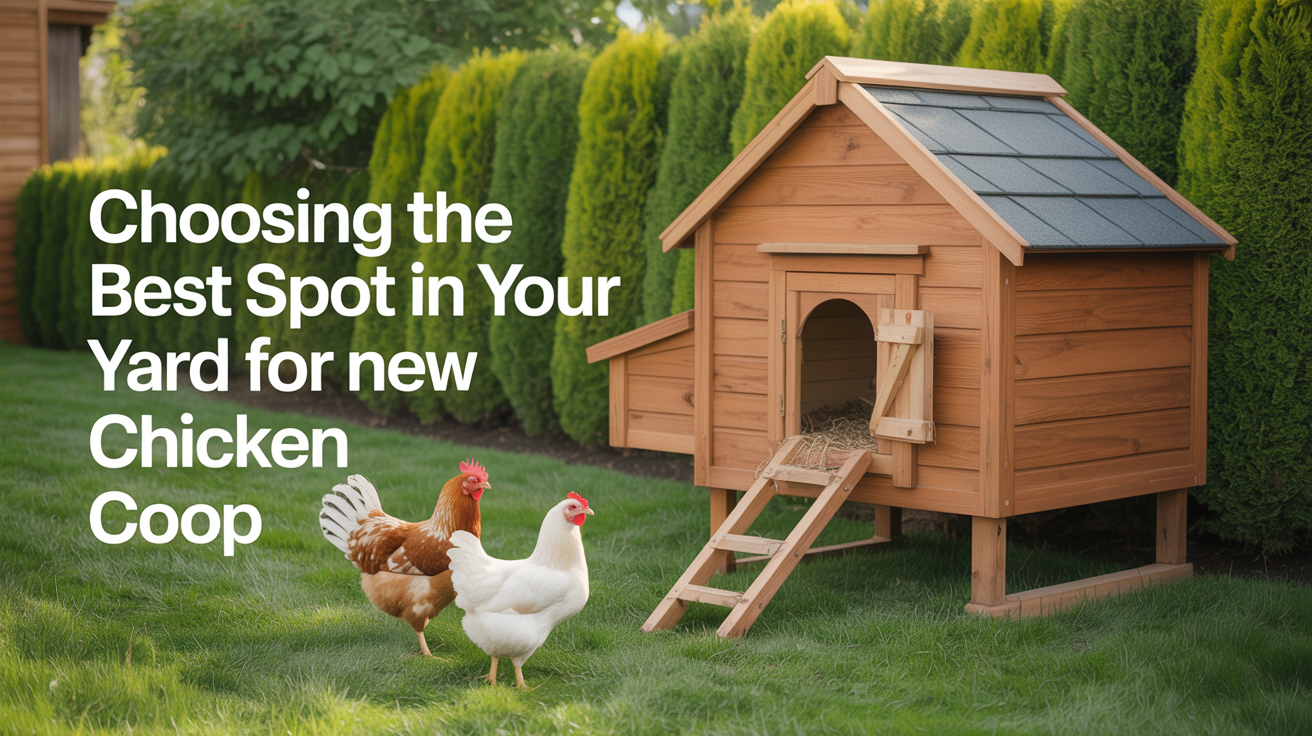
Before you buy lumber or order a kit, walk your yard with a cup of coffee and really look at it. Deciding where to put a chicken coop is cheap to get right up front and expensive to fix later. Move a fence, move a shed, sure. Move a coop sinking into a mud pit every spring, with a run that floods every time it rains? That's a weekend you don't get back.
Most new keepers pick a spot because it's flat, or out of the way, or because that's where the previous owner had a garden shed. None of those are wrong reasons, but they're not the right questions. The right questions are about water, light, distance, access, and what might want to eat your birds. Here's how to work through each before you break ground.
Start With Drainage, Not Looks
Water is the single biggest reason coop sites fail. A coop sitting where runoff collects turns the run into a soup of mud and droppings within a season, and wet bedding breeds ammonia and respiratory trouble faster than almost anything else you'll deal with as a keeper.
Walk the candidate spot during or right after a hard rain if you can. Look for:
- Standing water that takes more than a few hours to soak in or drain away
- A slope that channels water from higher ground straight through the site
- Soil that stays soggy and dark long after the rest of the yard has dried
- Low corners of the yard where leaves and debris naturally collect
A gentle slope is a feature, not a flaw. Water should move away from the coop, not pool under it. If your only flat option is a low spot, you can still use it, but plan to raise the coop floor and build up the run with several inches of coarse sand or gravel under the bedding so it drains instead of holding water. That's extra cost, so weigh it against choosing higher ground if the option exists.
Sun and Shade Change With the Seasons
New keepers often place a coop for how it looks in the exact week they're building it, then discover months later that the "sunny corner" is either an oven in July or a wind tunnel in January. Think about the whole year, not the day you're standing there with a shovel.
In hot, humid climates, afternoon shade matters more than morning sun. Chickens handle cold far better than heat, and a coop baking in direct afternoon sun with no relief can push birds into heat stress: panting, spread wings, dropped egg production. A site under deciduous trees is often ideal, shade in summer, more winter sun once the leaves drop.
In colder, cloudier climates, the calculation flips. You want morning sun to help the coop dry out overnight condensation, plus wind protection from your worst winter storms, whether that's a fence line, a hedge, or the house itself.
If you're unsure which pattern fits your area, partial shade with open sky is the safer default. Whatever you choose, the coop still needs strong airflow, not sealed-up walls. Read through why coop ventilation matters and how to get it right before finalizing a design, since the site you pick affects how you'll need to vent it.
Respect Property Lines and Your Neighbors' Windows
Even where chickens are allowed, courtesy and the law both have opinions about how close to the property line a coop can sit. Setback requirements exist mostly to manage noise, smell, and the awkwardness of a coop butting right up against a neighbor's patio or bedroom window.
A few things worth checking:
- How far is the coop from your property line, and does your municipality require a minimum setback?
- Which direction do your neighbors' windows and outdoor living spaces face relative to your yard?
- Which way does the prevailing wind blow? A coop that smells fine to you might carry odor straight into a neighbor's yard.
- Are you keeping a rooster now or later? Roosters change the noise equation, and some municipalities restrict them separately from hens.
Setback distances vary a lot from one town to the next; some places don't regulate it at all, others are strict down to the foot. Don't guess. If you haven't confirmed that chickens are allowed on your property and what the rules are, check your local rules before finalizing anything, including setback distances, coop size caps, and rooster restrictions. It's easier to check a zoning code once than to relocate a finished coop after a complaint.
Keep It Close Enough for Daily Chores
Chickens need attention every single day: fresh water, a look for anything wrong, eggs collected, sometimes a food refill. A coop tucked at the far back corner of a big property might seem like the tidy choice, but in January, in the dark, in the rain, that long walk gets old fast, and old fast is exactly how chores start getting skipped.
Aim for a spot you can see from a window in your house if possible. Being able to glance out and notice a hawk circling, a gate left open, or hens still out after dark is a real, everyday advantage. A short, easy path, one that doesn't turn to mud in wet weather, matters more than it sounds like it would.
Also think about the unglamorous logistics: hauling in feed and bedding, hauling out soiled bedding for the compost pile or trash. A site near a gate or driveway a wheelbarrow can reach, without stairs or narrow gaps between garden beds, will save your back.
Think Like a Predator Before You Build
Almost every backyard flock loss traces back to a predator finding an opening, and site selection is your first line of defense. A few features to avoid when choosing a spot:
- Dense brush, brambles, or overgrown fence lines right next to the site, giving predators cover to approach unseen
- Woodpiles or junk piles nearby that shelter rats, which in turn attract snakes and other predators
- Low or gappy fences at the yard's edge that a fox, coyote, or loose dog could slip through with a clear line to the coop
- Overhanging branches close enough for a hawk or owl to launch from over an open run
None of this means you need a bare, sterile yard. It means keeping a buffer of mowed, open ground between the coop and heavy cover, so anything approaching has to cross open space first. Pair good site choice with proper fortification: our guide to predator-proofing a coop and run covers the hardware side once you've picked a location that isn't already working against you.
A Walk-the-Yard Checklist
Before you commit to a site, walk it with this list in hand, ideally after a rain and at a couple of different times of day:
| Check | What you're looking for |
|---|---|
| Drainage | No standing water hours after rain; ground stays firm, not spongy |
| Sun pattern | Matches your climate: shade relief in hot areas, morning sun in cold ones |
| Setback | Meets your municipality's minimum distance from property lines |
| Neighbor impact | Not aimed directly at a neighbor's windows or patio; wind carries odor away, not toward them |
| Walking distance | Reachable easily in bad weather, ideally visible from the house |
| Access | A wheelbarrow or cart can reach it without obstacles |
| Predator cover | No dense brush, woodpiles, or low fence gaps immediately adjacent |
| Overhead | No low branches inviting hawks to perch right over the run |
If a spot fails more than one or two of these, keep looking before you commit lumber and labor to it. Once you're satisfied with a location, our beginner's guide to building a chicken coop walks through sizing, materials, and construction from there.
Frequently Asked Questions
Can I put a chicken coop in full shade all day?
You can, but it's rarely ideal. Full shade tends to stay damp longer after rain, working against drainage and dry bedding. Some direct sun helps dry out the coop and run and gives hens a spot to sunbathe. Aim for partial shade with real airflow rather than a deep, permanently shaded corner.
How far should a coop be from my house?
Close enough that daily chores stay easy in bad weather, but far enough that odor and noise don't become a nuisance right outside a door or window. Many keepers land on a short walk, visible from a window, without sitting right next to a patio or entryway. Your municipality may also set a minimum distance from the house itself, so check that alongside property line setbacks.
What if my whole yard is low and wet?
Raised ground under the coop floor and a well-drained run base (several inches of coarse sand or gravel under bedding) can make an otherwise wet yard workable. It's more upfront work, but it beats fighting mud and ammonia smell every rainy season. If part of your yard drains noticeably better than the rest, even by a small grade difference, prioritize that spot over convenience.
Do I really need to check setback rules if my neighbors won't mind?
Yes. Rules exist independent of whether your current neighbors object, and a complaint from someone new down the road, or a routine inspection, can bring a coop into question later. Confirming distances and permit requirements before you build protects the time and money you're putting into the project.
Should I pick the site before or after choosing a coop design?
Pick the general area first, based on drainage, sun, setbacks, and predator exposure, then fit the coop design to that spot. Forcing a design you already love onto a site that doesn't suit it usually means fighting the yard instead of working with it.