Eggs & Laying
How Long Do Chickens Lay Eggs? The Productive Years
A practical look at chicken laying lifespan, how egg production changes by age, and what to expect from your flock as hens get older.
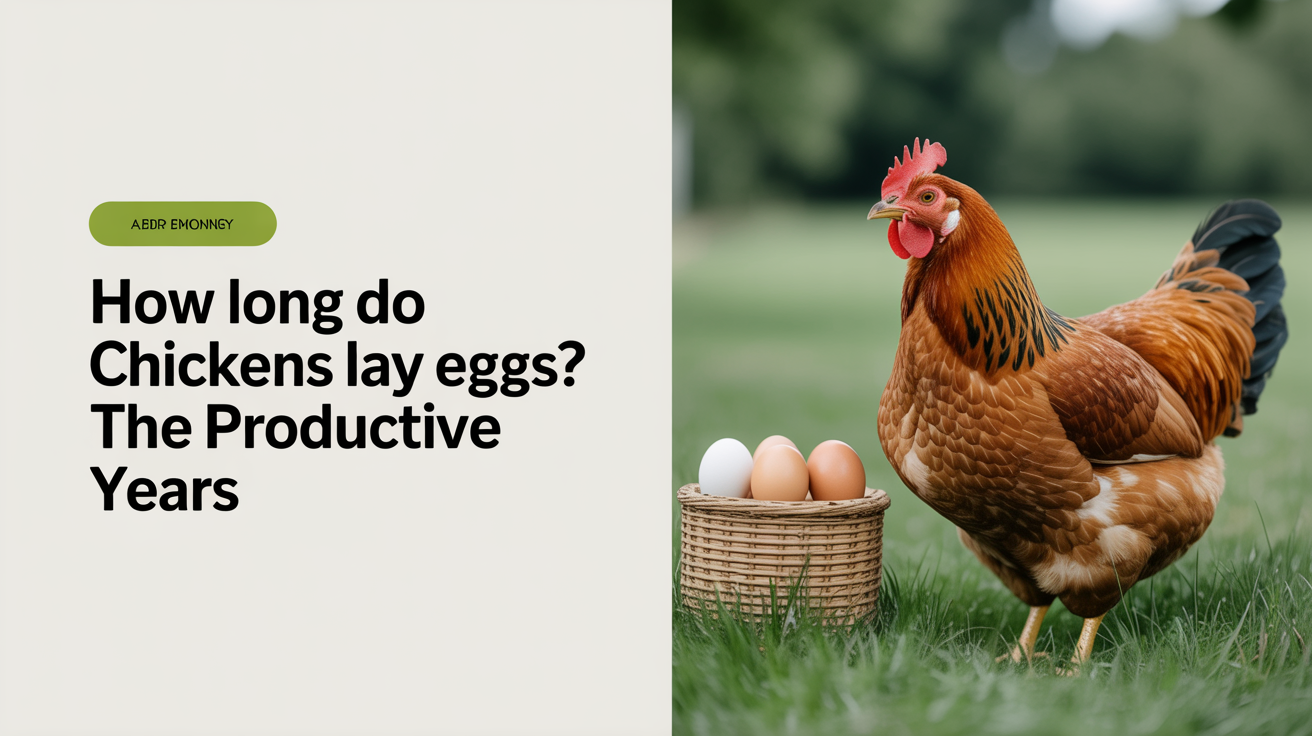
Every new keeper asks this question sooner or later: just how many years can you count on eggs from your hens? The short answer is that most backyard hens lay well for two to three years, then slow down gradually rather than stopping all at once. The longer answer depends on breed, management, and a fair bit of individual variation from bird to bird.
Understanding the rhythm of a hen's productive life helps you plan your flock, set realistic expectations for each season, and make thoughtful decisions about birds once their peak years are behind them.
The Peak Laying Window
A hen's first full laying year is almost always her best. Most breeds reach full production in the weeks after their first egg, and that pace holds through the first autumn and into the second spring. If you have a flock of pullets that started laying in late summer or autumn, their second spring, when day length climbs back above around 14 hours, typically brings the highest output you will see from them.
Year two stays strong for the majority of hens, though you may notice the pace drop slightly compared to year one. By year three, the decline is more obvious. Hens are still laying, still healthy, still part of the daily routine, but the basket fills a little more slowly.
If you want to dig into what drives that first egg, when do chickens start laying eggs covers the early development side in more detail.
How Egg Production Changes by Age
Hens are born with all the follicles they will ever have. Unlike mammals, they cannot produce new ones, so the supply is genuinely finite. Each egg laid draws down that reserve over time, which is part of why production eases off with age.
Here is a rough sense of what the years look like in a well-managed backyard flock:
Year 1: Most laying breeds produce close to their genetic ceiling. A production-type bird might deliver five or six eggs per week during long-day months. Heritage and dual-purpose breeds often run three to five per week.
Year 2: Output stays high but begins to taper. Many hens lay at 80 to 90 percent of their year-one pace. The eggs themselves often grow slightly larger, which is normal.
Year 3: A noticeable step down. Expect something closer to 60 to 70 percent of peak for many birds. Some hens hold on better than others.
Year 4 and beyond: Laying continues, but at a reduced and less predictable rate. Some hens still surprise you with a consistent run of eggs. Others become largely non-layers who are part of the flock in every other way.
There is real individual variation here. Two hens from the same hatch, raised identically, can diverge noticeably by year three. That is normal and not a sign anything is wrong.
Breed Matters More Than People Expect
Chicken laying lifespan is not a single number that applies to all birds. Breed selection shapes the trajectory significantly.
Production breeds like Leghorns, ISA Browns, and Golden Comets are developed specifically for high early output. They often lay more eggs in years one and two than heritage breeds, but that intensive production tends to come with a steeper drop-off in later years. Some production birds also carry a higher risk of reproductive issues, including egg binding and internal laying, so welfare-focused management matters especially with these types.
Heritage and dual-purpose breeds, including Rhode Island Reds, Plymouth Rocks, Australorps, and Orpingtons, typically lay at a more moderate pace early on but tend to maintain a more gradual decline. A seven-year-old Rhode Island Red hen may still contribute a few eggs a week in good seasons, which is genuinely uncommon in a commercial-strain bird.
If you are building a flock with longevity in mind, heritage breeds are usually the better fit. If you want maximum eggs in the near term and plan to replace birds after a few years, production breeds deliver on that.
The Annual Molt and Winter Gap
One thing that catches new keepers off guard is the autumn molt. Each year, usually in late summer or early autumn, hens shed and regrow their feathers. During this period, most hens stop laying entirely or produce only sporadically. The molt typically lasts six to twelve weeks.
This is not a sign of illness or poor management. It is a normal biological reset. The energy that would otherwise go toward egg production gets redirected to feather regrowth. A hen coming out of her molt often lays reliably again once day length stabilizes in late winter or early spring.
In older hens, the molt tends to be more pronounced and the recovery slower. A three-year-old hen may take longer to return to laying after her molt than she did at one year old. Supplemental lighting can help bridge the winter gap if you choose to use it, though many keepers allow hens to follow the natural seasonal rhythm as a form of rest. If you are working through a stretch where the whole flock seems to have shut down, why did my chickens stop laying eggs walks through the common causes.
Supporting Older Hens
Do older hens lay eggs? Yes, though less predictably. A five-year-old hen that still puts out two or three eggs a week in spring and summer is not unusual, especially among heritage breeds. What changes is the reliability and the volume.
Supporting good production in older birds is mostly about solid baseline care rather than any special intervention:
Consistent nutrition. Layer feed formulated for adult hens, with calcium available free-choice (crushed oyster shell in a separate container), gives older birds what they need for shell quality. Thin or soft shells in older hens often come down to calcium metabolism rather than a shortage in the feed.
Low-stress housing. Older hens can be lower in the pecking order if you have introduced younger birds over the years. Watch that they are getting adequate food and water access and are not being pushed off roost space at night.
Parasite management. External parasites like mites and lice put stress on any hen, but older birds with reduced immune resilience feel it more. Regular checks and prompt treatment keep the flock comfortable and productive.
Watch for reproductive issues. Hens in their later years have a higher rate of laying-related health problems. A hen that seems uncomfortable, has a swollen abdomen, or stops eating warrants a look from a poultry veterinarian. These issues are not always fixable, but early attention gives the best chance of a good outcome. When in doubt, contact a poultry vet or your local agricultural extension office rather than waiting.
If you want to work on production across the whole flock, how to get more eggs from your hens covers the practical levers that help at any age.
Planning for Flock Turnover
One of the practical realities of keeping backyard chickens for eggs is that production naturally declines across the flock as the birds age together. Many keepers add pullets every two to three years to keep the overall output steady, staggering age groups so there is always a cohort in peak production.
This approach also means older hens can stay on as part of the flock without the whole basket suffering. A mixed-age flock has its own dynamics, but it tends to be resilient. Young birds pick up the production slack while older hens contribute the experience of a settled social structure, and sometimes a few surprise eggs.
What you do with hens that have passed their productive years is a personal decision and one that keepers handle differently. Some keep older birds as flock companions for the rest of their natural lives. Others rehome them to people who want layers of a gentler pace. How you approach it depends on your space, your goals, and what feels right to you.
Frequently Asked Questions
How long do chickens typically lay eggs? Most hens lay actively for two to three years, with the first and second years being the highest output. After that, production declines gradually. Many hens continue to lay at a reduced rate until age five or six, and some hardy heritage birds produce occasional eggs even beyond that.
Do older hens stop laying completely? Not usually all at once. Most hens slow down rather than stop abruptly. The autumn molt each year brings a natural pause, and older hens tend to take longer to resume laying afterward. A true cessation of all egg production often happens somewhere between years five and seven, though individual variation is wide.
Does egg size change as hens age? Yes. Hens tend to lay slightly larger eggs as they get older, even as they lay less frequently. The shell can also become thinner with age, which is why consistent calcium access matters more, not less, in older birds.
Can I do anything to extend a hen's laying years? Good nutrition, low stress, consistent lighting management, and staying on top of health issues all support laying over a longer period. Breed choice matters too. Heritage breeds tend to have a more gradual production curve than commercial laying breeds. There is no way to override biology entirely, but management makes a real difference.
At what age should I consider adding new pullets to the flock? Many keepers plan a new batch of pullets every two to three years to keep overall production steady. If you add them annually, you always have birds in their prime laying year. Introducing younger birds to an established flock takes some management, but it is a reliable way to keep the basket full as older hens naturally slow down.