Eggs & Laying
When Do Chickens Start Laying Eggs?
Most pullets lay their first egg between 18 and 24 weeks old. Learn what affects timing, signs a hen is close to laying, and how to support her first eggs.
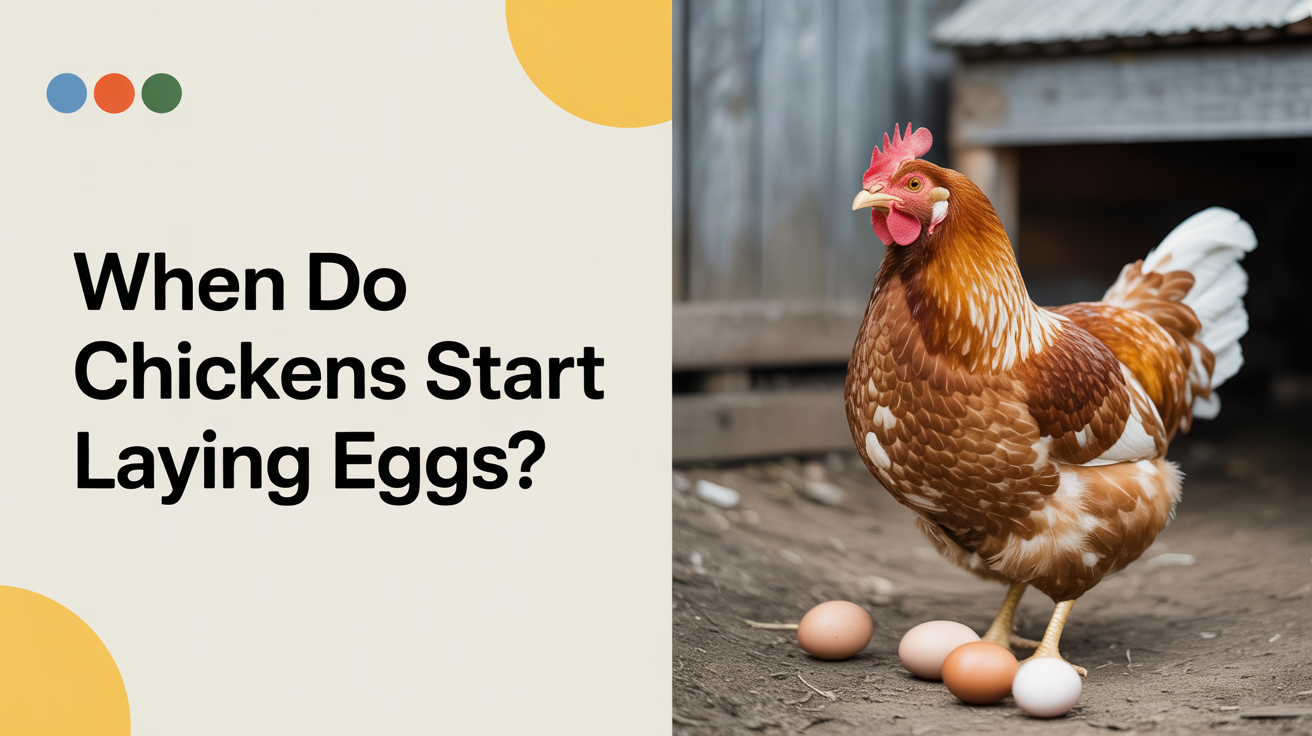
Most pullets lay their first egg somewhere between 18 and 24 weeks of age, though the actual number varies quite a bit by breed, season, and how well the bird has been fed and housed. Some fast-maturing breeds surprise you at 16 weeks; heavy heritage breeds might hold out until 28 or even 32 weeks. The good news is that once you know what to watch for, it's easy to tell when a pullet is getting close.
At a Glance
- Typical first-egg age is 18 to 24 weeks, driven mainly by day length (14+ hours of light) and breed genetics.
- High-production layers (Leghorns, Golden Comets) mature fastest, often 16 to 18 weeks; heavy heritage breeds (Brahmas, Cochins) can take 24 to 30 weeks.
- Watch for a reddening comb, the "squat" reflex, and nest-box exploration one to three weeks before the first egg.
- Feed protein matters: pullets need 15 to 18% protein to support reproductive development, per Penn State Extension's small-scale egg production guide.
- First eggs are small, sometimes yolkless ("wind eggs"), and often laid at irregular times before settling into a routine.
- Set up nest boxes with fake eggs at least two weeks before the earliest expected lay date.
What "Point of Lay" Actually Means
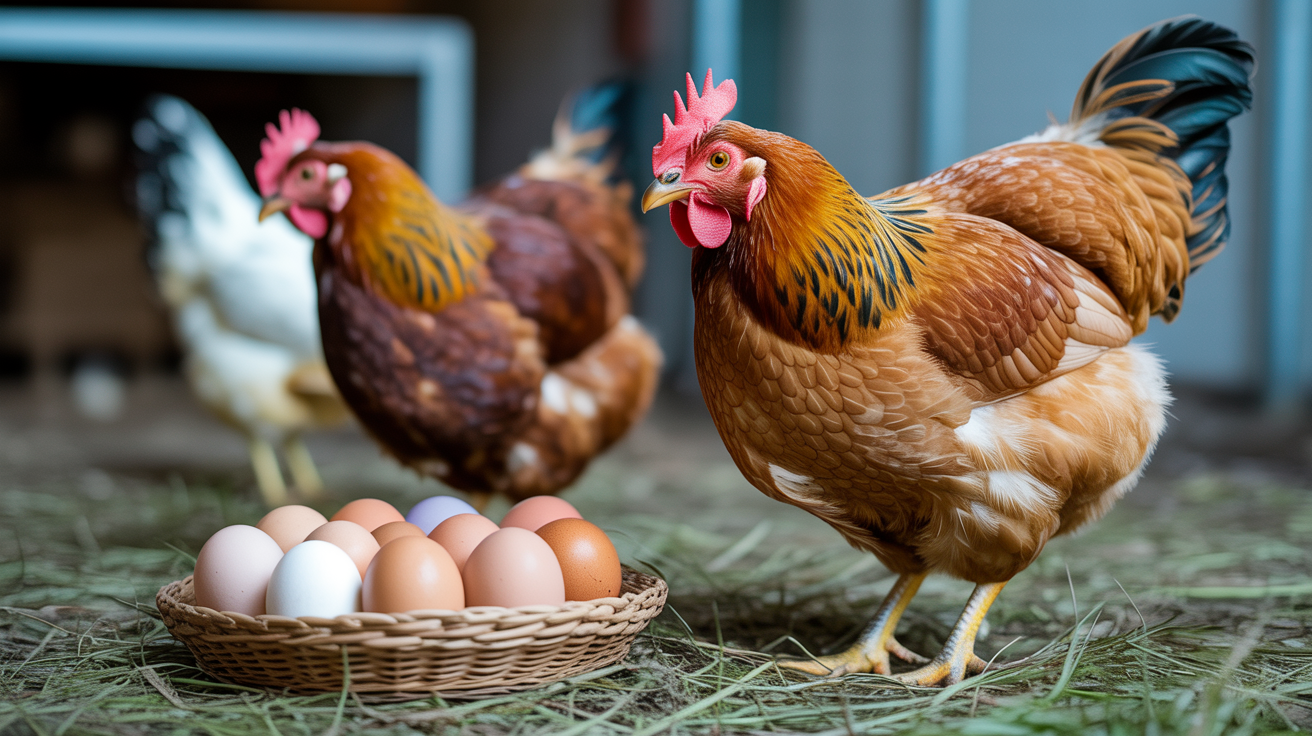
You'll see hatchery catalogs and feed-store tags use the phrase "point of lay" to describe pullets that are nearly ready to start producing. In practice, it's not a precise date. It's a window of about two to four weeks where the bird's reproductive system is maturing and you might get a first egg any morning.
A pullet reaches point of lay when her body has finished converting feed energy into growth and starts directing it toward egg production instead. The trigger is primarily day length: her brain detects increasing light (14 or more hours per day) through her skull, which stimulates the pituitary gland to release the hormones that kick off the laying cycle. This is why spring-hatched pullets often begin laying right on schedule, while fall-hatched pullets hatched in August can stall through the short days of winter and not lay until the following February or March.
Penn State Extension's guide to small-scale egg production confirms the commercial framing of this window: producers who buy started pullets typically get birds at 16 to 18 weeks old, sold as ready (or nearly ready) to begin laying, and recommends a lighting schedule that starts at 12 hours a day and increases by about 30 minutes a week up to a 16-hour maximum to bring pullets into production on a predictable timeline.
It's worth understanding that "point of lay" pullets sold at feed stores or from hatcheries are usually between 15 and 18 weeks old. That label is commercial shorthand for "close, but not there yet." Some of those birds may lay within days of coming home; others might take another six weeks. Don't expect eggs the first week just because the tag said point of lay.
Age by Breed Type
Breed matters more than most new keepers expect. Here's a rough breakdown:
| Breed type | Example breeds | Typical first-egg age |
|---|---|---|
| High-production layers | Leghorn, Golden Comet, ISA Brown | 16–18 weeks |
| Medium dual-purpose | Rhode Island Red, Plymouth Rock, Australorp | 20–24 weeks |
| Heavy heritage | Brahma, Cochin, Orpington | 24–30 weeks |
| Bantam | Silkie, Belgian d'Uccle, Serama | 22–26 weeks |
| Ornamental/rare | Ayam Cemani, Svart Hona | 28–35 weeks |
If you're raising a mixed flock, expect the production-breed pullets to start weeks before the heavy heritage hens. That early gap is completely normal and not a sign anything is wrong with the slower birds.
Hatch Date Matters as Much as Age
Two pullets of the same breed hatched six months apart can hit point of lay at noticeably different chronological ages, because day length, not age alone, drives the hormonal trigger. A worked comparison makes this concrete:
| Hatch Timing | Age Range Reaches 18–20 Weeks | Day Length at That Point | Likely Result |
|---|---|---|---|
| Spring hatch (March–April) | August–September | Still 12+ hours, declining | Lays close to schedule |
| Early summer hatch (June) | October–November | Under 11 hours and falling | Often lays on schedule, close call |
| Late summer hatch (August) | December–January | Under 10 hours | Frequently stalls until February–March daylight returns |
This is why two batches of the same breed from the same hatchery can behave completely differently depending on when you ordered them. If you're planning your first flock and want eggs as close as possible to the standard 18-to-24-week window, ordering chicks in early spring gives the pullets naturally lengthening days right as they approach maturity, which lines up with their hormonal trigger instead of working against it. A late-summer or fall hatch isn't a mistake, but budget for a longer wait, or plan to add supplemental light once the pullets reach 16 to 18 weeks so the short days of early winter don't stall them for months.
Signs a Pullet Is Getting Close
You won't always catch the very first egg, but the week or two leading up to it gives reliable clues:
Comb and wattles redden and grow. A pullet's comb stays small and pale pink for most of her juvenile life. As her hormones ramp up, the comb flushes red and stands upright. This is the single clearest signal and usually shows up one to three weeks before the first egg.
She squats when you approach. This submissive crouch (called "the squat" or "the mating reflex") appears when a pullet's estrogen rises. She'll crouch and spread her wings slightly when you reach toward her. Many keepers find this the most reliable predictor, typically showing up five to ten days before laying begins.
She explores the nest boxes. A pullet who starts sitting in nest boxes, rearranging nesting material, or pacing in and out of the coop during mid-morning is doing a dry run. Give her two or three fake eggs (ceramic or rubber) in the boxes to encourage her to settle in the right spot.
Her vent widens and her pelvic bones spread. You can check by gently placing two fingers between her pelvic bones. In a pre-lay pullet, the bones are close together (less than one finger's width apart); a laying hen's pelvis is wide enough to fit two fingers or more. This takes a little practice but becomes second nature.
She gets louder. Many pullets start producing a louder, more insistent call in the days before their first egg, especially in the morning. Seasoned keepers call it the "egg song," but it actually starts before the eggs do.
Timeline From Hatch to First Egg
Putting the signs in order against a typical high-production breed's calendar makes the whole process easier to track:
| Age | What's Happening |
|---|---|
| 0–8 weeks | Chick starter feed (18–20% protein); no reproductive development yet |
| 8–14 weeks | Grower feed (15–16% protein); frame and feather growth |
| 14–16 weeks | Comb and wattles begin to color and enlarge |
| 15–18 weeks | Nest-box exploration, occasional squatting; "point of lay" label applies here |
| 16–24 weeks | First egg (breed-dependent, see table above) |
| 4–6 weeks after first egg | Production stabilizes toward peak weekly output |
Factors That Delay First Lay
If your pullets are past 24 weeks and nothing is happening, run through this checklist before worrying:
- Short days or dim coop. Less than 12 to 14 hours of light per day will stall or suppress laying. If your coop is dark or it's autumn, add a simple timer-controlled bulb (a 9-watt LED is plenty) to bring total light up to 14 to 16 hours. See why your hens may have stopped laying for more on light management.
- Feed quality. A pullet needs 15 to 18% protein in her diet to support reproductive development, and University of Missouri Extension's small flock series notes that birds should move onto a layer diet right around 18 weeks of age, roughly when the first eggs are expected. Scratch grains and kitchen scraps are fun, but they dilute the protein content of your layer or grower pellets. Keep treats to 10% or less of daily intake.
- Heat stress. Pullets in climates where summer temperatures regularly push above 90°F can delay laying. Shade, ventilation, and cool water help.
- Molting or illness. A pullet going through a juvenile mini-molt can pause her development briefly. Any illness (respiratory, parasitic, or otherwise) redirects energy away from reproduction. If a bird looks unwell rather than just late to lay, contact a poultry veterinarian or your local agricultural extension office.
- Heavy-breed genetics. Some breeds simply take longer. An Orpington at 24 weeks that looks healthy and is showing comb development just needs a few more weeks.
- Overcrowding stress. Pullets need at least 4 square feet of coop space per bird and 8 to 10 square feet of outdoor run space. Cramped conditions raise stress hormones that actively suppress the laying cycle. If you've added new birds recently and your existing pullets have slowed down, flock dynamics and space could be the culprit.
- Deworming needed. A high worm burden quietly saps a bird's energy and nutrition without producing obvious sick-bird symptoms. If your flock hasn't been checked for intestinal parasites and the delay is unexplained, it's a good thing to rule out with your vet or extension office.
The First Few Eggs
A pullet's first eggs are almost always smaller than what you'll see from a mature hen. They're typically described as "pullet eggs" and run about half the size of a standard large egg. Some early eggs have no yolk at all (called "wind eggs" or "fairy eggs"), which is common and harmless. The shell can be thin, rough-textured, or occasionally soft in the first week or two as her shell gland calibrates. Double-yolk eggs are also more common in young hens whose cycle is still settling into rhythm.
Expect production to stabilize over the first four to six weeks. A Golden Comet pullet might jump straight to five or six eggs per week; an Australorp might start at three and work her way up to five. High-production breeds like ISA Browns typically average 280 to 300 eggs per year at peak, while a dual-purpose Barred Rock might settle at 200 to 250. Heritage breeds generally live longer and decline more gradually.
It's also normal for a young hen to lay at odd hours during the first few weeks. A mature hen usually lays in the morning, but pullets often produce at unpredictable times before their internal clock syncs up. Check the nest boxes a couple of times a day early on, and make sure the boxes are padded enough that fragile first eggs don't crack on landing.
Once she's in a regular groove, how to get more eggs from your hens covers the feed, lighting, and flock-management levers that keep production consistent year-round. And when that first basket starts filling up, proper egg collection and storage is worth a read. Fresh backyard eggs handle differently than supermarket ones, and the rules are simpler than most people expect.
Setting Up Nest Boxes Before the First Egg
Don't wait until you find an egg on the coop floor to set up your nest boxes. Have them ready at least two weeks before your earliest expected first-lay date. A good general rule is one nest box for every three to four hens; more than that and you'll have empty boxes, fewer and hens start competing and piling in, which breaks shells.
Fill boxes with about 3 to 4 inches of clean nesting material. Straw, wood shavings, or hemp bedding all work well. The goal is a soft, dry surface that cushions eggs and stays relatively clean. Some keepers add a "curtain" of burlap or fabric strips across the box opening to create a darker, more private space that hens prefer for laying.
Place two or three fake eggs (ceramic, wooden, or rubber) in the boxes before the pullets start exploring them. This teaches young hens where eggs belong and greatly reduces the number of floor eggs and broken shells you'll deal with early on. Pull the fakes out once production is established.
Position nest boxes lower than the roost bars. Chickens want to sleep as high as possible; if your boxes are at roost height or higher, hens will sleep in them and foul the nesting material nightly. A box height of 12 to 18 inches off the floor with a small ramp or step works for most breeds. Heavy breeds like Brahmas or Cochins appreciate lower boxes, since they can stress their legs jumping down from height repeatedly.
Frequently Asked Questions
My pullet is 20 weeks old and her comb is still pale. Should I be worried?
Not yet. Comb development depends heavily on breed and genetics. A Silkie or Easter Egger will have a much less prominent, paler comb than a Leghorn at the same age. Focus on whether she's active, eating well, and growing normally. If she's past 30 weeks with no comb color and no squatting reflex, it's worth reviewing her light exposure and feed protein levels.
Can a pullet lay before 16 weeks?
It happens occasionally with very early-maturing production breeds (some Golden Comets and ISA Browns), but it's uncommon and generally not ideal. A pullet who lays too young may produce smaller eggs for longer or wear out her reproductive system faster. There's no intervention needed (it's genetics), but it's a good reminder that production-line hybrids are bred for output, not longevity.
Do I need a rooster for hens to start laying?
No. Hens lay eggs on their own cycle regardless of whether a rooster is present. A rooster is only needed if you want fertilized eggs for hatching. For backyard egg production, roosters are entirely optional.
Why did I get a tiny egg with no yolk?
Wind eggs (also called fairy eggs or fart eggs) happen when a hen's reproductive system sends an egg white through the shell gland without a yolk attached. They're most common in the first few weeks of a pullet's laying career when her cycle is still calibrating. Occasional wind eggs from established hens can happen too and are usually nothing to worry about. If a hen is producing them repeatedly over several weeks, a poultry vet visit is a reasonable next step.
How long will my hens keep laying?
Most hens produce reliably for two to three years, then taper off significantly. High-production hybrids like ISA Browns burn bright and often drop sharply after year two. Heritage breeds like Rhode Island Reds or Dominiques tend to decline more gradually and may still lay a modest number of eggs into years four and five. Egg production is affected by molting, day length, age, and overall health. A good layer pausing for a few weeks each autumn as she molts and regrows her feathers is completely normal.
Should I add artificial light to speed up a pullet's first egg?
You can, but do it carefully. Adding light too early (before about 16 weeks) can push a pullet into laying before her frame has fully matured, which tends to produce smaller eggs and can strain her reproductive system over time. If your pullets are already past the typical first-lay age for their breed and the delay looks like a light problem (short winter days, a dark coop), a gradual increase toward 14 to 16 hours total light, added in the morning rather than the evening so birds still go to roost at natural dusk, is the safer approach.