Eggs & Laying
Why Did My Chickens Stop Laying Eggs?
Hens not laying? Discover the most common reasons for a sudden drop in egg production and practical steps to get your flock back on track.
You go out to the nest boxes, lift the lids, and find nothing. Again. If your hens were laying reliably last month and have suddenly gone quiet, you're not alone. A sudden drop in egg production is one of the most common puzzles backyard keepers face, and the good news is that most causes are fixable once you know what to look for.
At a Glance
- Check day length first. Hens need roughly 14 to 16 hours of light to sustain laying, so a sudden stop that lines up with shorter fall days is usually a lighting problem, not illness.
- A pause of 8 to 16 weeks in late summer or fall is very likely a normal molt, not a health crisis. Don't force laying through it.
- Rule out hidden nests and egg eating before you troubleshoot anything else. Both mimic a "laying stopped" problem while the hens are actually still producing.
- Thin or soft shells almost always show up before laying stops outright, so a calcium or protein gap is easy to catch early if you're checking eggs closely.
- Give any single fix (added light, a feed change, calming a stressed flock) 2 to 4 weeks before deciding it isn't working. Hens don't restart overnight.
- A hen that's hunched, has a swollen abdomen, or is breathing hard needs a poultry vet, not a home remedy.
Light: The Single Biggest Driver of Laying
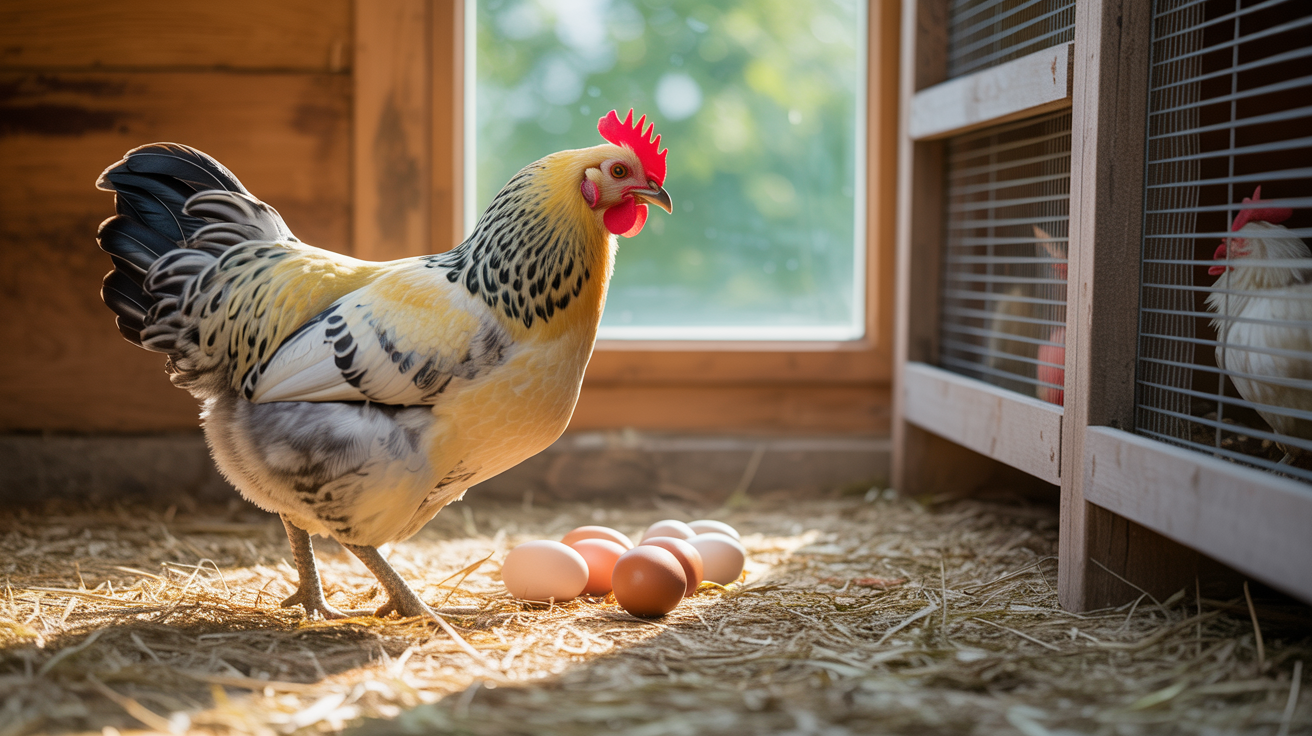
Hens need roughly 14 to 16 hours of light per day to keep their laying cycle running. This is why production dips so predictably in fall and winter as days shorten. The pineal gland in a hen's eye registers light and triggers the hormonal cascade that leads to ovulation, so when the signal drops, laying slows or stops entirely. Maine Extension's poultry lighting guidance puts it plainly: laying hens should never see a drop in day length, because while 11 to 12 hours of light is enough to start production in pullets, it is not enough to sustain high output in a mature flock. Most keepers add supplemental light once natural day length falls below about 15 hours.
What you can do
Adding supplemental light in the coop is the most reliable fix. A single low-wattage LED bulb on a timer can extend the "day" by a few hours, ideally added in the morning so hens still go to roost at natural dusk. A few things worth knowing:
- Give hens at least 8 weeks on supplemental lighting before expecting a full return to production.
- Keep the light consistent. Erratic schedules are almost as bad as no light at all, since hens respond to a stable pattern, not just total hours.
- Abrupt darkness (power outage, blown bulb, timer failure) can trigger a molt and a longer laying pause than the interruption itself would suggest.
- A rough sizing guide from small-flock lighting research: one 60-watt equivalent bulb (a 14-watt CFL or 9-watt LED puts out about the same light) per 200 square feet of coop floor, positioned so light reaches the feeder area rather than just the ceiling.
Younger hens (pullets under 60 weeks) are more resilient to light changes than older birds, which is one reason a flock that skews older tends to show a steeper winter dip than a younger one.
Molting: The Annual Reset
Once a year, typically in late summer or fall, hens redirect their protein budget from egg production to feather regrowth. A hard molt can shut laying down completely for 8 to 16 weeks. You'll notice feathers scattered around the coop, bare patches on necks and backs, and hens that look a little ragged. Some hens molt hard and fast over a few weeks; others trickle through a soft molt for months while laying sporadically the whole time. Both are normal, and which pattern a given hen shows is mostly a matter of individual variation and breed.
The molt is completely normal. Trying to force laying through a molt with extra light or high-energy treats can stress the birds and produce thin-shelled eggs. The better move is to bump protein: switching to a 20 percent protein feed temporarily helps feathers come in faster, since a feather is close to 85 percent protein by weight and the bird has to rebuild every one of them. Once the new plumage is in, production resumes on its own, usually within two to three weeks of the last new feathers coming in.
If you want to better understand the full laying timeline from pullet to mature hen, when chickens start laying eggs covers the early stages in detail.
Stress, Predator Pressure, and Flock Disruption
Chickens are creatures of habit. Any significant disruption can cause hens to pause laying for days or weeks:
- A predator attack (even an unsuccessful one at night) leaves the flock on high alert for days afterward.
- Moving the coop, adding or removing birds, or integrating a new rooster.
- Extreme heat (above 90°F) or cold snaps below freezing, especially sudden swings rather than a gradual seasonal change.
- A change in feed brand or a gap in fresh water access, even one that only lasted an afternoon.
- Loud, repeated noise near the coop (construction, fireworks, a new dog in the yard).
The stress response redirects energy away from reproduction. Identify what changed, address it, and give the flock time to settle. In most cases, laying resumes within two to four weeks once conditions stabilize. If it's been longer than that with no obvious trigger, move on to the nutrition and health checks below rather than continuing to wait it out.
Overcrowding stress
Space matters more than most keepers realize. The general rule is 4 square feet per bird inside the coop and 10 square feet per bird in the run. Cramped quarters increase pecking, competition at feeders and waterers, and general anxiety, and that low-grade chronic stress is easy to miss because there's no single dramatic event to point to. If your flock has grown but the space hasn't, that's worth fixing before anything else. Adding a second feeder or waterer alone, without adding floor space, sometimes takes the edge off enough to matter.
Nutritional Gaps
Egg production is metabolically expensive. A hen laying at peak deposits about 2 grams of calcium into each shell daily. If the diet doesn't supply enough calcium, phosphorus, and protein, the body simply stops producing eggs rather than deplete its own reserves indefinitely. Mississippi State's poultry nutrition guidance lists a minimum calcium level of 3.0 percent for a complete layer ration, with roughly 16 percent protein, and it notes that if shells are already coming in thin, working in about 2 pounds of oyster shell per 100 pounds of feed gives a fast correction while you sort out the underlying cause.
| Nutrient | Why it matters | Sign of deficiency |
|---|---|---|
| Calcium (3.0–4.5% of diet) | Shell formation | Thin or soft shells before laying stops |
| Protein (16–18% of diet) | Egg albumen, feather upkeep | Slow feather regrowth, low egg weight |
| Vitamin D3 | Calcium absorption | Shell quality problems even with adequate Ca |
| Water | Eggs are ~74% water | Even brief dehydration cuts production fast |
Free-choice oyster shell alongside a quality layer feed handles the calcium side for most flocks. Check that your feed is actually a layer formula (not a grower or flock raiser with no added calcium) and that it hasn't passed its expiration date. Stale feed loses nutritional potency, and rancid fat in old feed can actively suppress appetite. It's also worth not diluting a complete feed with too much scratch grain or too many treats: poultry extension guidance on egg production flags exactly this as a common, self-inflicted cause of reduced laying, since scratch and treats crowd out the balanced ration without the bird noticing anything is wrong until shell quality or output slips.
For more targeted advice on feeding strategies that support consistent production, how to get more eggs from your hens goes deeper into nutrition and management tactics.
Quick Reference: Cause vs. Timeline vs. Fix
| Suspected cause | Typical time off lay | What actually fixes it |
|---|---|---|
| Shortening day length | Gradual decline over weeks | Supplemental light to 14–16 hrs/day, minimum 8 weeks to see full recovery |
| Annual molt | 8–16 weeks | Nothing to "fix"; bump protein to ~20% and wait |
| Acute stress event | 1–4 weeks | Remove the stressor, keep routine stable |
| Calcium/protein gap | Gradual, shells decline first | Confirm layer feed + free-choice oyster shell |
| Flock aging (3+ years) | Permanent decline | Add pullets to keep basket counts up |
| Illness or parasites | Variable, other symptoms present | Vet exam, not home remedies |
Age and the Natural Decline
Hens hit their peak production in their first and second laying years. By year three or four, output drops noticeably, often by a third or more compared to a pullet's first full year. By year five, many hens lay only occasionally, though some breeds (Australorps, Leghorns, certain production Reds) hold up longer than others.
This isn't a problem to solve so much as a reality to plan around. If your flock average is getting older, adding pullets is the most reliable way to maintain basket counts. A mixed-age flock usually keeps production more even through the year than a flock of same-age birds that all molt and pause simultaneously, since a same-age flock effectively shuts down production all at once every fall.
Hidden Nests and Egg Eaters
Before assuming a laying problem, rule out two sneaky culprits.
Hidden nests. Free-range birds or hens with access to shrubs, deep litter, or equipment often find a secret spot they prefer over the nest boxes. A quick search of the coop perimeter, under raised structures, and in dense vegetation sometimes turns up a stash of two or three weeks' worth of eggs. This is worth checking first, before you spend two weeks troubleshooting light and feed for a problem that doesn't actually exist.
Egg eating. Once a hen figures out that eggs are edible (usually after accidentally cracking one), the habit spreads fast, since other hens in the coop watch and copy. Signs: nest boxes that always seem empty, egg yolk on beaks or bedding, shells with no contents. Filling nest boxes so they're darker, using ceramic dummy eggs, and collecting eggs several times a day can break the cycle. Persistent cases sometimes require isolating the culprit, since a habitual egg eater rarely stops on her own once the behavior is established.
Health Issues to Rule Out
If none of the above explains the pause, illness may be the cause. Infectious bronchitis, egg drop syndrome, Newcastle disease, and internal laying (where the egg material deposits inside the body instead of passing out normally) can all halt production. Mites and lice cause enough chronic stress and blood loss to suppress laying without any other obvious symptoms, so a hands-on check under the wings and around the vent is worth doing before you rule out a health cause entirely.
Examine birds closely. Check under wing feathers and around the vent for mites. Watch for watery eyes, nasal discharge, labored breathing, or lethargy. A hen that sits hunched, has a swollen abdomen, or seems in pain needs a poultry veterinarian, not a home remedy. These symptoms can indicate serious infections or reproductive disorders that require proper diagnosis.
Your local agricultural extension office is also a good resource, especially if multiple birds are affected at once. A sudden flock-wide drop is more likely a management or environmental issue; if birds are also showing clinical signs, assume infectious disease until proven otherwise.
Frequently Asked Questions
How long does it take for hens to start laying again after a molt?
A hard molt typically keeps hens off lay for 8 to 16 weeks. Younger hens and those on a high-protein diet (18 to 20 percent) tend to come back faster. Once the new feathers are fully in, laying usually resumes within two to three weeks.
Can stress really stop egg production completely?
Yes. A significant stressor (predator attack, extreme weather, flock disruption) can shut down laying entirely for one to four weeks. Hens have a limited energy budget and reproductive activity is the first thing the body deprioritizes under pressure.
My hen laid every day for months and now nothing. Is she sick?
Not necessarily. A sudden stop in an otherwise healthy bird is most often caused by the onset of molt, a light change, or a stressor you may not have noticed. Look for feather loss, check the coop lighting, and think through any recent changes. If she seems lethargic, is losing weight, has a distended abdomen, or shows respiratory symptoms, have her seen by a vet.
Does the breed affect how likely hens are to stop laying?
Yes, significantly. Production breeds (White Leghorns, commercial-type Reds) are bred to push through seasonal light changes and lay through their first two or three years with minimal breaks. Heritage and dual-purpose breeds (Orpingtons, Wyandottes, Dominiques) are more responsive to environmental cues and more likely to take seasonal pauses.
My hens are laying, but egg numbers dropped by half. What causes a partial drop?
A partial drop rather than a complete stop usually points to a gradual cause: flock aging, mild nutritional gaps, slowly decreasing day length, or low-grade stress. Also check whether one or two hens have stopped entirely and the rest are fine. A single bird pausing (molt, laying break, health issue) looks like a flock-wide partial drop when you're watching the basket count. Marking eggs from individual hens for a week or two can clarify who is and isn't contributing.
I added supplemental light two weeks ago and nothing has changed yet. Should I add more light or give up?
Give it more time before changing course. Most flocks need a full 8 weeks on consistent supplemental light before production climbs back toward normal, and adding more hours beyond the 14 to 16 hour target doesn't speed that up. Check that the light is actually running on a stable schedule (a timer that reset after a power blip is a common, easy-to-miss culprit) before assuming the fix isn't working.
Once your hens are back on track, proper handling makes the most of every egg. How to collect and store fresh eggs safely covers everything from timing your daily collection to refrigeration decisions.