Eggs & Laying
Keeping Hens Laying Through Winter
Learn why egg production drops in winter and how supplemental light, good feed, and a dry coop can help your hens keep laying through the cold months.
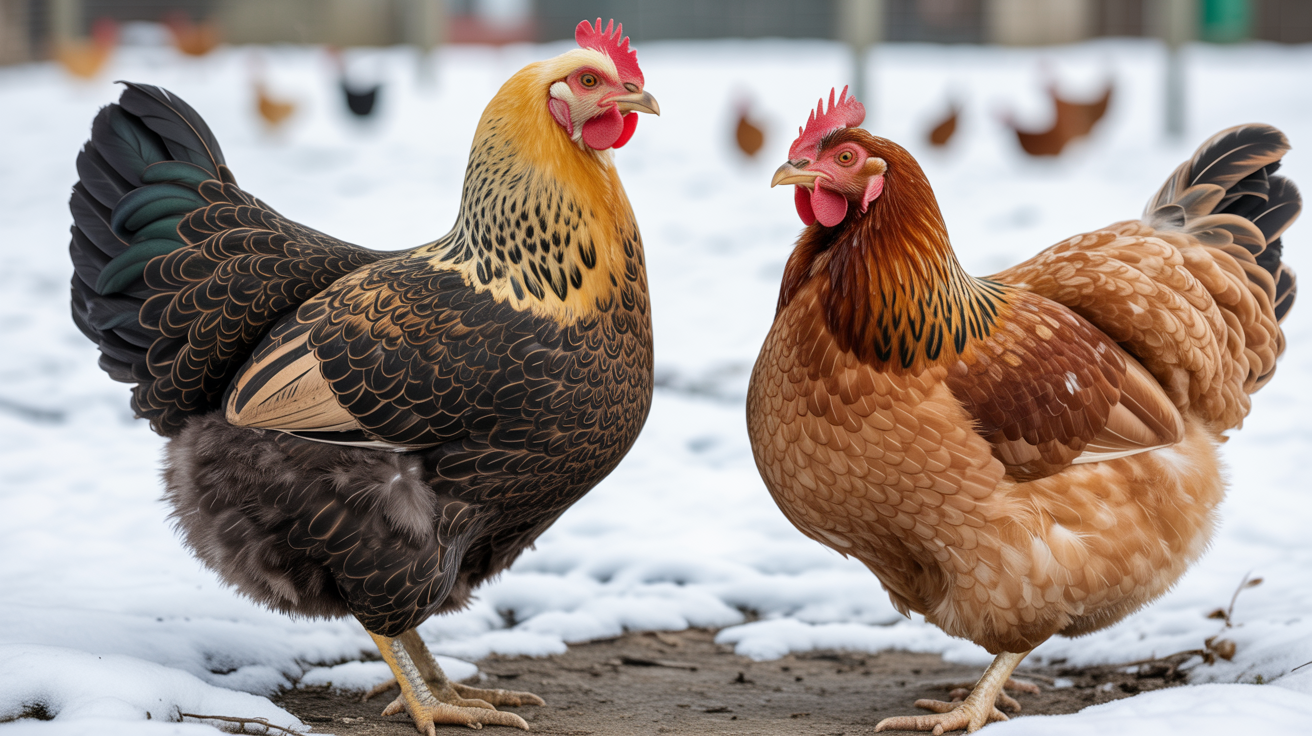
If you cracked a dozen eggs a day through summer and are now finding one or two cold eggs in the nest box, you are not doing anything wrong. The drop in winter egg production is one of the most predictable patterns in backyard keeping, and understanding why it happens makes it much easier to decide what, if anything, you want to do about it.
This guide walks through the biology behind the slowdown, the pros and cons of adding supplemental light, what to feed through cold weather, and how to set up the coop so hens stay comfortable enough to keep working.
Why Hens Slow Down in Winter
Chickens read daylight, not temperature. The retina and a light-sensitive region in the brain detect day length, and when days shorten below roughly 14 hours of light, the pituitary gland dials back the hormones that trigger ovulation. A hen's reproductive system essentially rests. Evolution wired this in for good reason: shorter days signal that spring hatch timing is off, and stopping production conserves the energy a hen needs to stay warm.
Two things often pile on at the same time. Hens also tend to molt in late summer or fall, losing and regrowing feathers while pausing laying. A bird in full molt and short days may not produce a single egg for six to eight weeks. If you are seeing bare patches on necks and backs alongside empty nest boxes, that combination explains the complete halt.
A pullet that started laying in late summer may keep going through her first winter reasonably well, because she has not hit a full molt cycle yet and her reproductive system is still getting warmed up. Older hens tend to drop off more sharply. This is normal, not illness.
For more on the timeline of when hens first come into lay and what affects it, see when do chickens start laying eggs.
Supplemental Light for Laying: What Works and What to Watch
Adding light in the coop is the most direct way to maintain winter egg production. The goal is to give hens a total of 14 to 16 hours of light per day. You are not trying to mimic summer midday; you are just keeping the timer above the threshold that keeps the pituitary active.
A few practical notes on doing this well:
Add light in the morning, not the evening. Programmed timers that extend the morning work better than extending the evening. If the light simply cuts off at night, hens roosting under artificial light can be caught in sudden darkness and pile on each other trying to find the perches. Adding morning hours avoids that. Set the timer to come on two to four hours before sunrise, giving natural light the task of ending the day.
Use a low-wattage bulb. A standard incandescent bulb or a 9-watt LED puts out enough light for this purpose. The bulb does not need to be bright; hens are sensitive to light cues at fairly low lux levels. Avoid heat lamps for this purpose. They create a fire risk when left unattended for hours and add heat that can backfire if it leads to poor ventilation management.
Start before the days get short. If you wait until November to start supplemental lighting, your hens may already have stopped cycling. Beginning in early September or whenever your days drop below 15 hours keeps the system running rather than trying to restart it.
Welfare consideration. Hens have a finite number of eggs they will produce in a lifetime. Using supplemental light means they lay those eggs over a shorter number of years. Many backyard keepers use light freely and simply plan for earlier retirement of older birds. Others prefer to let hens rest naturally each winter. Both approaches are legitimate. Knowing the tradeoff helps you make the call that fits your flock goals.
Feeding for Winter Laying
Egg production costs a hen real resources, particularly calcium and protein. Cold weather adds to that demand because birds burn more energy just staying warm. A hen trying to lay through winter on thin rations will struggle, and her body will prioritize survival over reproduction.
Keep the layer feed coming. A quality layer pellet or crumble stays the foundation. Do not dilute it heavily with scratch grains or corn in winter just because the birds seem hungry and scratch is cheap. Scratch is high in carbohydrates and low in protein. A flock that gets too much scratch will slow down laying even under good light conditions.
Offer free-choice oyster shell. Laying hens need roughly four grams of calcium per egg. If the diet cannot supply that, a hen pulls calcium from her own bones, which shows up eventually in soft-shelled eggs and skeletal problems. Keep a separate feeder of crushed oyster shell available at all times so each bird can take what she needs.
Warm water twice a day. Hens that are not drinking enough will not lay well. In below-freezing weather, waterers ice over quickly. Switching to a heated waterer or swapping in warm water morning and afternoon keeps intake steady. A bird will not break ice to drink; she will simply dehydrate.
Consider a small protein bump for molting birds. During molt, feathers take priority over eggs. High-protein supplements like dried mealworms or a temporary switch to a flock raiser at around 18 to 20 percent protein can support faster feather regrowth, after which laying resumes sooner.
For more on adjusting feed to support production, see how to get more eggs from your hens.
Coop Setup for Cold-Weather Laying
A stressed bird does not lay reliably. Cold, drafty, or crowded conditions keep hens in a low-level stress state that suppresses production even when light and feed are adequate.
Ventilation over insulation. This is the point that surprises most new keepers. A tight, sealed coop traps moisture from droppings and respiration, leading to frostbite on combs and wattles and respiratory trouble. A well-ventilated coop that stays dry is warmer in practice than a damp sealed one. Vents near the roofline let moisture escape without creating drafts at roost height.
Deep bedding does the work. A thick layer of pine shavings or straw on the floor composts slowly and generates a small amount of heat. More practically, it keeps birds off the cold bare ground and stays warmer underfoot than a thin covering. Keep adding fresh bedding on top through winter rather than doing a full clean-out until spring.
Roost space matters. On the roost at night, hens sit on their feet and fluff feathers to form an insulating layer. Make sure every bird has enough roost space to sit comfortably without being pushed off. Crowded roosts mean cold birds, and cold birds do not lay.
You do not need to heat the coop. Healthy adult chickens in reasonable body condition tolerate temperatures well below freezing. The exception is a comb-heavy breed like a single-comb Leghorn in very harsh climates, where petroleum jelly on the comb can reduce frostbite risk. Adding a heat lamp carries real fire risk and can also prevent hens from acclimating to the cold. Unless you are dealing with chicks, recovering sick birds, or extreme temperatures well below what a breed can handle, a dry insulated coop with good roost space is enough.
When the Slowdown Is Something Else
Sometimes reduced winter egg production is not just about light and cold. Why did my chickens stop laying eggs covers the full range of causes, but a few are worth flagging specifically for winter.
A hen that stopped laying and also looks puffed up, lethargic, or has watery droppings may be dealing with a health issue that has nothing to do with season. Parasites like mites and lice become harder to spot under heavy winter feathering and can drain a bird's condition enough to shut down laying. Check under wings and around the vent area if you are seeing poor production alongside birds that seem off.
Egg hiding is also more common when hens are partly free-ranging in winter and shelter in places other than the coop. A low-lying shrub or a gap under a shed can become a favored nest spot. Do a walkabout before concluding the flock is simply not laying.
If you have a bird that seems to be straining but producing nothing, especially if the abdomen feels swollen, that warrants a call to a poultry vet rather than a feed adjustment. Egg binding and internal laying are health emergencies, not production slumps.
Frequently Asked Questions
Do chickens lay in winter if I do not add light? Some do, some do not. Younger hens and breeds selected for high production, like Rhode Island Reds or ISA Browns, may continue at a reduced rate. Heritage and ornamental breeds tend to shut down more completely. Most backyard flocks see a noticeable drop without supplemental lighting.
How many hours of light do hens need to keep laying? The threshold is generally 14 hours of combined natural and artificial light. Going to 15 or 16 hours gives a bit more buffer. Going beyond 16 hours does not meaningfully increase production and is harder on the birds.
Can I use a red heat lamp for supplemental lighting? You can use a red bulb as a light source, though it is not necessary. However, using a heat lamp as the light source is a poor tradeoff. Heat lamps are a leading cause of coop fires and add heat the birds generally do not need. A simple LED on a timer is safer and adequate.
My hens are molting and it is almost winter. Should I start the light now? You can start it, but expect a delay. A bird in active molt is not going to lay regardless of light signals. Get the light going to prevent further shutdown once molt finishes, but do not expect an immediate turnaround. Most hens come back into lay within two to three weeks of completing feather regrowth.
Is it okay to let hens rest through winter without any intervention? Yes. A natural winter rest may extend the productive life of your hens by preserving the total egg count for later years. Many keepers who are not relying on eggs as a primary food source prefer this approach. The birds stay healthy, molt fully, and come back strong in spring.