Coops & Housing
Roosting Bars: Setup and Why Chickens Need Them
Learn how to set up chicken roosting bars, the right height, size, and spacing — plus how a roost differs from a nesting box.
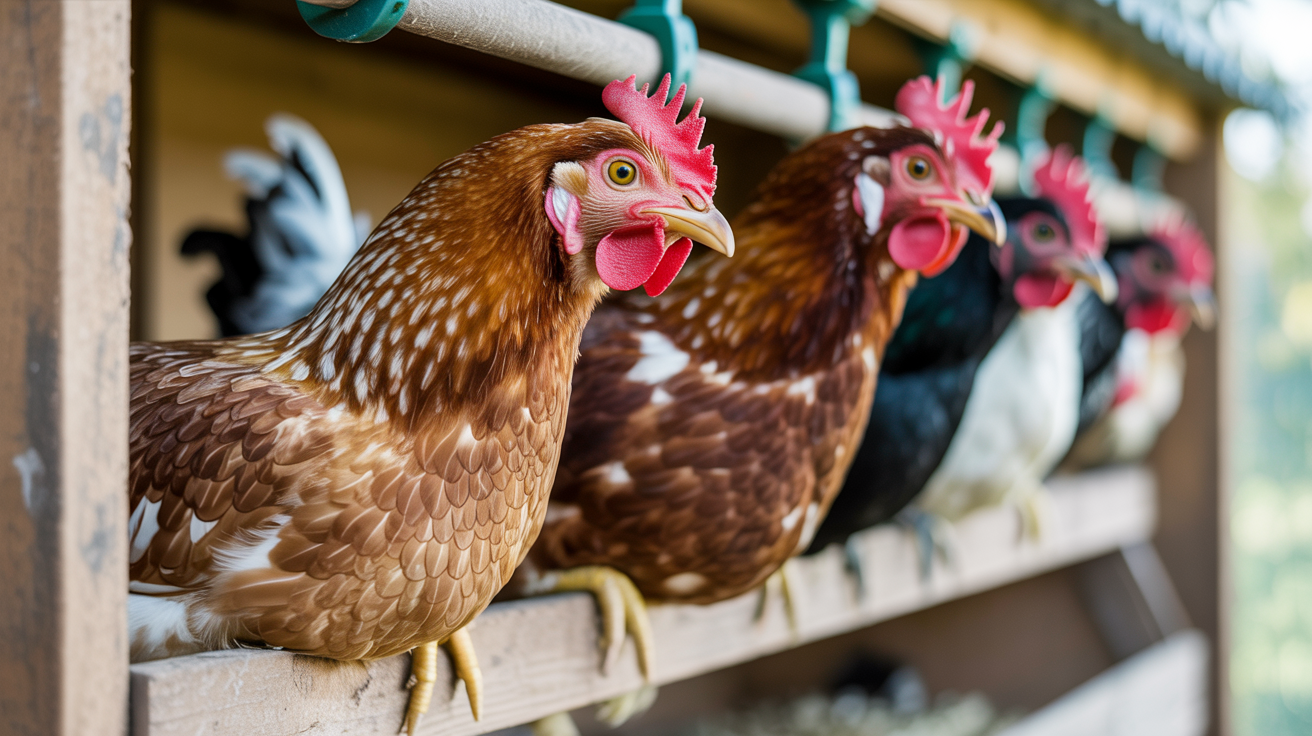
Chickens don't sleep on the ground by choice. Given the option, they'll climb as high as they can and tuck in for the night shoulder to shoulder on a bar or branch. That instinct is thousands of years old, and ignoring it leads to wet, soiled flocks and a lot of unnecessary health problems. Getting your roosting bars right is one of the highest-leverage things you can do for your birds.
Why Roosting Bars Matter
Wild junglefowl sleep in trees. Your Barred Rocks and Easter Eggers carry the same wiring. Perching off the ground keeps them away from predators, away from their own droppings, and allows them to regulate body heat by tucking their feet under their feathers. A bird that sleeps on the floor night after night is constantly exposed to ammonia from manure, moisture from bedding, and drafts. Over months, that adds up to respiratory illness, scaly leg mite infestations, and general immune suppression.
There's also a social dimension. Chickens have a pecking order, and they sort themselves on the roost every single evening. Lower-ranking birds often end up on the ends or on lower bars. A coop with enough bar length and proper layout gives every bird a spot without the ones at the bottom getting shoved off entirely.
How Much Roost Space Does Each Bird Need?
A common rule of thumb is 8 to 10 inches of bar length per standard-sized hen. In practice, aim for the higher end because chickens fluff up significantly in cold weather and they do genuinely press together for warmth, but they still need room to land and shift position without chaos.
For bantam breeds, 6 inches per bird is usually enough. Large, heavy breeds like Brahmas and Jersey Giants are more comfortable with 12 inches because their body mass makes tight quarters harder to manage.
Here's a quick reference:
| Bird Type | Minimum Bar Length Per Bird |
|---|---|
| Bantam breeds | 6 inches |
| Standard laying hens | 8–10 inches |
| Heavy/dual-purpose breeds | 10–12 inches |
If your flock is 6 standard hens, you want at least 5 feet of total roosting bar length. Two 3-foot bars would give you comfortable breathing room.
Chicken Roost Height: How High Is Right?
This is where a lot of first-time keepers over-engineer things. The goal is high enough to feel safe, low enough that birds can get up and down without injury.
For most backyard coops with standard-sized hens, the sweet spot is 18 to 24 inches off the floor. That's reachable for a healthy bird and doesn't create a risky drop. If you have multiple bars at different heights, stagger them so the highest is around 24 to 36 inches and each lower bar is set back horizontally so birds above aren't dropping droppings directly onto the birds below.
Heavy breeds and older birds need lower bars, full stop. A Buff Orpington hen jumping down from 36 inches repeatedly over months is a candidate for bumblefoot and strained joints. Keep their roosts at 12 to 18 inches. Younger pullets, around 8 to 12 weeks old, will start to roost on their own once they figure it out, though you may need to physically place them on the bar a few evenings in a row to get them started.
One thing to avoid: ladder-style roosts where bars are directly above each other with no horizontal offset. The birds on the bottom end up coated in droppings by morning. A stair-step arrangement, with each higher bar set about 12 inches back from the one below, solves this completely.
If you're still planning your coop size and layout, the space-per-bird breakdown is worth reading before you finalize roost placement.
Roost vs. Nesting Box: What's the Difference?
People new to chickens sometimes wonder whether hens will just sleep in their nesting boxes. They will, if you let them, and it creates a messy situation fast. Hens sleep for 8 or more hours at night and produce a significant amount of droppings in that time. A nesting box full of nighttime manure is a box your hens won't want to lay eggs in, and the eggs that do get laid there will be dirty.
The distinction matters:
- Roosting bars are where hens sleep. They should be higher than the nesting boxes to take advantage of the birds' instinct to sleep at the highest point available.
- Nesting boxes are where hens lay eggs. They should be lower, darker, and enclosed on three sides. Hens want privacy when laying; they don't want a perch.
If your nesting boxes are mounted higher than your roost bars, the hens will pick the boxes every time. The fix is to mount roosts at least 4 to 6 inches higher than the top of the nest boxes. Some keepers also use a slanted board over the boxes at night to block access, removing the temptation entirely.
DIY Chicken Roost: Materials and Build Notes
Building your own roosting bars is genuinely simple and cheap. Here's what works well:
Wood. A 2x4 laid flat (wide side up) is the most practical material for standard or cold climates. The 3.5-inch flat surface lets hens cover their toes with their breast feathers when temperatures drop, which prevents frostbite far better than a round dowel. A 2x2 round-edged dowel works fine in warm climates where frost isn't a concern.
Diameter. For standard hens, aim for a bar between 1.5 and 2 inches in diameter if you're using a rounded roost. The bird needs to grip without hyperextending its toes. Very thin bars (under 1 inch) cause foot fatigue and contribute to bumblefoot over time.
Surface finish. Leave wood natural or apply a food-safe linseed oil finish. Avoid paint, varnish, or treated lumber on roosting surfaces. Smooth but not slippery is the goal.
Mounting. Removable roosts make coop cleaning dramatically easier. A simple notch or bracket system lets you pull the bars out, scrape them down, and replace them in a few minutes. Permanently screwed-in roosts turn that job into a workout.
For a deeper look at construction details, the beginner's guide to building a chicken coop walks through framing and interior layout in much more detail.
Maintenance and Troubleshooting
Roosts accumulate droppings every night, so plan for regular cleaning. A droppings board mounted below the roost bar catches most of the overnight manure and can be scraped clean in two minutes every morning. That alone makes a bigger difference to coop air quality than almost anything else. Good coop ventilation works hand-in-hand with droppings management: fresh air carries ammonia out; a droppings board reduces the source.
Watch for these problems:
- Hens sleeping on the floor. Usually a sign the roost bars are too high, too thin, or there isn't enough space for the whole flock. Lower the bars or add more length.
- Feather picking on the roost. Overcrowding is the usual cause. Add bar length or a second bar at a different height.
- Mites on the bars. Red mites hide in cracks and crevices during the day and feed on birds at night. If your hens seem restless after dark or you spot tiny reddish specks on the bars at night, that's a red mite problem. Consult your local agricultural extension office or a poultry vet for a treatment plan appropriate to your region, since products and regulations vary.
- Scaly leg mites. These live on the bird, not the bar, but keeping roosts clean and smooth helps prevent reinfection once treated.
Frequently Asked Questions
How many roosting bars do I need for my flock?
Enough bar length so every bird has 8 to 10 inches of space. One long bar works if you have a small flock; two bars at different heights give birds more options and reduce competition. A flock of 8 standard hens needs roughly 6 to 7 feet of total bar length, comfortably.
Can I use a tree branch as a roost?
Absolutely. A hardwood branch 2 to 3 inches in diameter makes an excellent roost and is free. Rough bark actually gives hens better grip than a sanded dowel. Just check for splinters or sharp bark edges before installing, and replace it if it starts to decay or harbor mites.
Should roost bars be round or flat?
Both work, but a flat 2x4 (wide side up) is better in climates where winter temperatures drop below freezing. Hens can fully cover their feet with their feathers on a flat surface, which prevents frostbite. In warm climates with no frost risk, a round 2-inch dowel or branch is perfectly fine and more natural-feeling for the birds.
My hens won't use the roost. What should I do?
Young pullets often need a week or two of "training." After dark, when they're docile, pick each one up and place her on the bar. Do that for a few nights running and most birds catch on quickly. If adult hens suddenly stop roosting, check for red mites on the bars at night with a flashlight. Mite infestations make roosting painful and birds will avoid the bars entirely.
Do roosters roost the same way as hens?
Yes. Roosters roost on the same bars as the hens, usually at one of the ends since they're often the last to settle. They need the same 8 to 10 inches of bar space. The main difference is that an assertive rooster may claim the highest spot on the roost, which is normal flock behavior.